ugly ads are winning Key Takeaways
The reversal is striking: the more professional an ad looks, the more skeptical viewers become.
- Ugly ads are winning because authenticity outperforms polish in today’s attention economy.
- Low-budget, user-generated style creatives often see 2–3x higher click-through rates than studio-produced ads.
- To compete, brands need to embrace imperfection: direct-to-camera footage, rough cuts, and real customer voices.
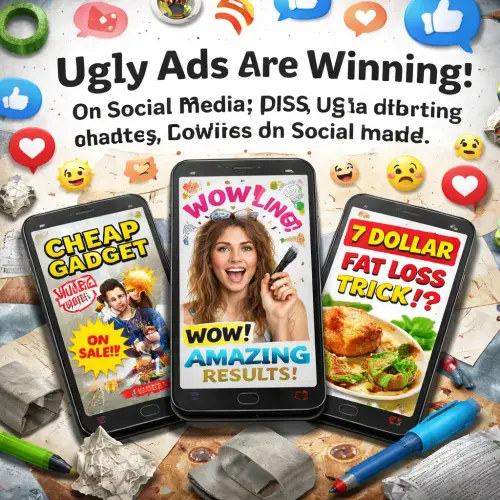
Why Ugly Ads Are Winning in 2025
Consumers are overwhelmed. Every day, they scroll past hundreds of perfectly staged photos, scripted video ads, and influencer posts that feel like magazine spreads. The result? Ad fatigue. And that’s exactly why ugly ads are winning. For a related guide, see Ai Influencers: 5 Smart AI Influencer Risks Every Marketer Must Avoid.
Ugly ads aren’t actually ugly in a negative sense—they’re raw, unpolished, and human. Think shaky smartphone footage, amateur lighting, unscripted testimonials, and simple text overlays. These ads look like they were made in five minutes by someone who genuinely loves the product, not by a marketing committee.
The reversal is striking: the more professional an ad looks, the more skeptical viewers become. Ugly ads short-circuit that skepticism. They signal, “We’re real people, we didn’t spend a fortune on this video, and we just want to share something good.” That signal is gold.
The Data Behind the Shift
According to a 2024 study by Meta, ads that scored highest for “authenticity” (measured by viewer perception of rawness) had a 45% higher conversion rate than those rated as high-quality production. Independent tests by agencies like DTC Daily show that simple selfie-style ads for DTC brands often produce a ROAS 2.5x higher than traditional video spots. The numbers are clear: ugly ads are winning across the board.
5 Reasons Ugly Ads Social Media Campaigns Outperform Polished Creatives
Why does ugly work so well? These five psychological and practical advantages explain the trend.
1. Authenticity Triggers Trust Instantly
When an ad looks too perfect, viewers assume it’s scripted, paid for, and likely exaggerated. Ugly ads, by contrast, feel like content a friend would share. The rough edges—background noise, imperfect framing, natural speech—signal that the creator has nothing to hide. This authenticity is the single biggest reason why ugly ads are winning against expensive campaigns.
2. Low Budget Means Low Risk, High Volume
A brand can shoot fifty ugly ad variations in a single afternoon with just a smartphone and good lighting. Compare that to the weeks and thousands of dollars needed for one studio-produced spot. With low risk per variant, you can test dozens of hooks, angles, and offers. The winning ugly ad gets scaled; the losers cost almost nothing. That’s ruthless efficiency.
3. Viewers Perceive Higher Authenticity Signals
Studies in consumer psychology show that imperfections—such as stuttering, unscripted laughs, or a dog barking in the background—increase perceived honesty. These are called “suboptimal authenticity cues.” When you scratch the polished veneer, you actually make your brand more credible. This is the core mechanism explaining why ugly ads convert better than sleek alternatives.
4. Faster Production Cycle Means Faster Iteration
The algorithm rewards speed. Social platforms prioritize fresh content. With ugly ads, you can shoot, edit (minimally), and publish the same day. If an ad takes off, you can double down with a quick variant featuring a different hook or CTA within hours. Polished content locks you into a slow, expensive cycle that can’t keep up with trends.
5. They Feel Like Native Content, Not Ads
The best ad is one viewers don’t immediately recognize as an ad. Ugly ads look exactly like UGC (user-generated content) or casual influencer posts. That form factor blends into the feed. People watch them because they look like entertainment or education, not interruption. On platforms where native feel is everything, ugly ads are winning the scroll-stopping battle.
How to Create a High-Converting Ugly Ad Campaign
You don’t need a video production degree. Follow this step-by-step framework to launch your own strategy.
Step 1: Identify Your Core Offer and Hook
Before you hit record, write down the single problem your product solves and the one surprising benefit you want to communicate. The hook should be a genuine question or insight. For example: “I tried 12 protein powders, and this is the only one that doesn’t make me bloated.”
Step 2: Shoot Naturally with Just a Smartphone
Use your phone’s rear camera. Find good natural light (window light works best). Record in a single take if possible. Don’t rehearse too much—the goal is to sound like a real person. If you stumble, keep going. Mistakes add authenticity.
Step 3: Edit Only to Remove Dead Air
Use free tools like CapCut or Canva to trim awkward pauses, add captions (important for silent viewing), and maybe one simple text headline. Avoid transitions, filters, or background music that sounds like a stock library. The less editing, the better.
Step 4: Write a Short, Honest Caption
Don’t write like a brand voice guide. Write like you’re texting a friend: “Found this random thing on Amazon and honestly, it changed my mornings.” Use emojis sparingly. Include a simple CTA: “Link in bio if you’re curious.”
Step 5: Test at Least 5 Variations Per Offer
Change the hook, the camera angle, or the presenter. Run each as a separate ad set with a small budget ($5–$10/day for 3–5 days). Kill losers quickly; scale winners. This rapid testing cycle is where ugly ads truly shine.
Common Mistakes When Using Ugly Ads Social Media Campaigns
Ugly ads work, but only if you avoid these traps.
Mistake 1: Confusing Ugly with Sloppy
There’s a difference between raw and lazy. Raw means unfiltered but still coherent. Sloppy means bad audio that makes it impossible to hear, or shaky camera work that causes motion sickness. Always ensure the core message is clear. Good lighting and clear audio are non-negotiable, even on a zero budget.
Mistake 2: Overthinking the Script
The whole point is to sound spontaneous. If you write a word-for-word script and try to read it naturally under an ugly ad format, it will feel fake. Bullet points of key talking points are fine. Memorized copy is not. Let the words flow naturally.
Mistake 3: Ignoring the Call to Action
Authenticity is great, but you still need to ask for the click. Make sure your ugly ad includes a clear, simple CTA. “Grab yours here” or “Link below” works. Don’t bury the CTA under too much storytelling.
| Factor | Polished Ads | Ugly Ads |
|---|---|---|
| Production Cost | $2,000–$50,000 per video | $0–$200 per video |
| Production Time | 1–4 weeks | 1–4 hours |
| Authenticity Score | Low to Medium | High |
| Iteration Speed | Slow | Very fast |
| Best Platform Fit | YouTube pre-roll, TV, LinkedIn | TikTok, Instagram Reels, Facebook Feed |
| Risk per Test | High | Low |
| Typical CTR | 0.5% – 1.5% | 1.5% – 4.5% |
Advanced Tips to Scale Your Ugly Ad Strategy
Once you’ve validated ugly ads for your brand, try these tweaks to push performance further.
Repurpose Customer UGC into Ads
Ask happy customers if you can repost their videos. Add a simple “Thank you” text overlay and run them as ads. This is the ultimate ugly ad—real people with zero incentive except genuine enthusiasm. Many brands see their best ROAS from customer-created content.
Test Ugly Ads Across Different Audiences
What works for a Gen Z audience on TikTok might not work for a higher-income demographic on Facebook. But often, the exact same raw ad can outperform polished content across all age groups. Test the same ugly video in broad, interest-based, and retargeting audiences to find where it resonates most.
Combine Ugly Creatives with Strong Copy
The visual may be raw, but the offer and copy should be sharp. Pair an amateur-looking video with a clear, benefit-driven headline in the ad copy. The contrast between casual visual and compelling offer is very effective.
Useful Resources
For further reading on why authenticity drives conversion, check out Neil Patel’s breakdown of why ugly ads convert. For platform-specific guidelines on creating raw content, Meta’s own Creative Best Practices page offers helpful tips.
Frequently Asked Questions About ugly ads are winning
What exactly are ugly ads ?
Ugly ads are social media creatives made with minimal production—usually shot on a smartphone, with natural lighting, unscripted dialogue, and no fancy editing. They look like user-generated content rather than professionally produced commercials. For a related guide, see 7 Reasons Creator-Led Ads Are Beating Traditional Campaigns.
Why are ugly ads winning on social media right now?
Consumers have developed banner blindness and ad fatigue toward polished content. Ugly ads feel authentic and trustworthy, which cuts through the noise. Platforms like TikTok and Reels also reward raw, native-looking content in the algorithm.
Do ugly ads work for every industry?
They work well for DTC brands, SaaS products, local services, and even B2B—especially when the goal is lead generation or direct sales. Luxury brands may find them harder to use, but even heritage brands test raw formats for specific campaigns.
How much do ugly ads cost to produce?
Usually nothing beyond the time of the person recording. A smartphone, good natural light, and free editing software like CapCut are all you need. Some brands spend $50–$200 for a simple script outline or basic captioning service.
Can ugly ads hurt my brand image?
Only if you confuse raw with unprofessional. As long as the audio is clear, the lighting is decent, and the message is coherent, ugly ads tend to improve brand perception by making you seem more human and accessible.
How do I measure the success of ugly ads ?
Track click-through rate, conversion rate, cost per conversion, and video retention rate. Compare these metrics against your polished ad benchmarks. Most brands see higher CTR and lower CPA with ugly ads.
How many ugly ads should I test per campaign?
Aim for at least five variations per audience segment. Test different hooks, presenters, and shooting environments. Low production cost makes this easy and fast.
Do ugly ads work on LinkedIn?
Yes, but with moderation. LinkedIn audiences still expect some professionalism. A selfie-style video with a clear value proposition can work well for B2B lead gen if it’s not too casual.
Should I use a script for ugly ads ?
Use bullet points of key talking points, not a full script. Reading from a script kills the natural feel that makes ugly ads effective. Trust yourself to speak naturally.
What platforms perform best for ugly ads ?
TikTok, Instagram Reels, and Facebook Feed are the top performers. YouTube Shorts and Pinterest also work well. The key is vertical, native-looking video that blends into the feed.
Do ugly ads work for retargeting?
Extremely well. Retargeting audiences already know your brand, so a raw testimonial or quick demo feels like a helpful reminder rather than a sales pitch. Ugly ads can boost retargeting conversion rates significantly.
How long should an ugly ad be?
15 to 30 seconds is the sweet spot. Longer formats work if the content is genuinely engaging, but keep it concise to respect viewers’ attention spans.
Should ugly ads include captions?
Yes, always. Many users watch without sound. Auto-generated captions are fine, but manual captions allow you to emphasize key words and control the timing.
Can I reuse polished ad content as ugly content?
No, that defeats the purpose. Ugly ads need to be shot with intention—the raw style is part of the message. Cutting polished footage down won’t create the same authenticity effect.
What’s the biggest mistake brands make with ugly ads ?
Overproducing them. Adding too many transitions, filters, or scripted sound bites makes them feel fake. The whole point is to look like you hardly tried. Resist the urge to polish.
How often should I post ugly ads ?
Post new ugly ads weekly to keep testing fresh angles and hooks. Unlike polished ads that require long production cycles, ugly ads let you maintain a steady cadence of creative tests.
Are ugly ads a trend or a permanent shift?
While the format may evolve, the underlying driver—consumer demand for authenticity—is permanent. Ugly ads represent a marketing philosophy shift that will remain effective for the foreseeable future.
Do ugly ads affect brand trust negatively?
No, quite the opposite. Multiple studies show that perceived imperfection increases trust. Ugly ads make the brand seem more transparent and less manipulative, which builds long-term trust.
Can I run ugly ads alongside polished ads?
Yes, and it’s smart to do so. Let the data decide which format performs better for each audience and offer. A balanced media mix between polished branding content and raw direct-response ads often yields the best overall results.
Where can I find examples of successful ugly ads ?
Search social platforms for “raw ad tutorial,” “ugly ad example,” or browse the creative libraries of brands like Liquid IV, Magic Spoon, and Bite Toothpaste. Many DTC brands now exclusively use user-generated style ads.