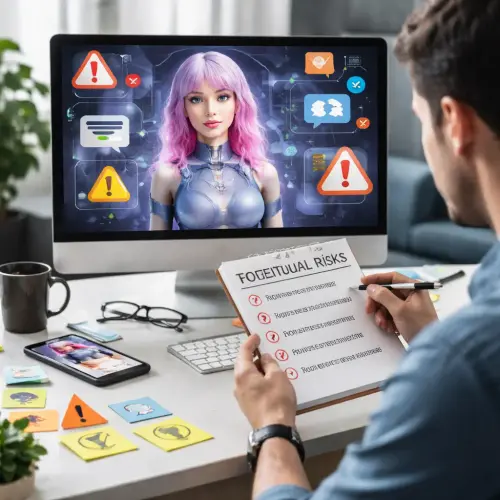
AI Influencers Key Takeaways
AI influencers are reshaping social media marketing by offering always-on presence and data-driven content at a fraction of the cost of human talent.
- AI influencers can reduce campaign costs by up to 80%, but budget savings vanish if you ignore disclosure laws and platform rules.
- Without guardrails, AI influencers marketing risks damaging brand trust through fake engagement or tone-deaf cultural responses.
- Successful social media marketing AI influencers programs combine human oversight, transparent labeling, and performance auditing.
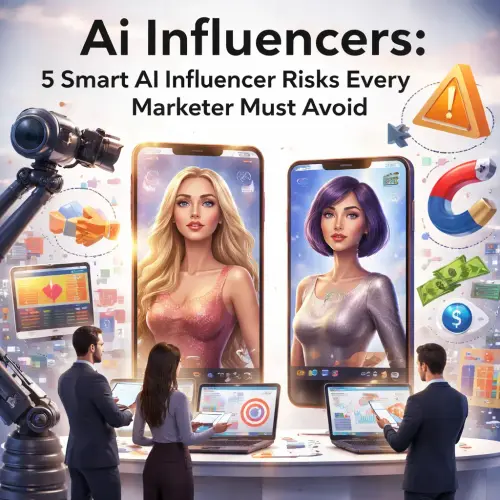
Why AI Influencers Are Revamping the Marketing Playbook
Influencer marketing has long relied on human personalities — authentic voices that build trust over time. But a new wave of AI influencers — digital characters powered by generative AI and machine learning — now commands millions of followers on Instagram, TikTok, and YouTube. Popular avatars like Lil Miquela, Shudu, and Imma have proven that synthetic personalities can drive engagement and sales. For a related guide, see AI vs Human Content: 5 Proven Social Media Wins.
For brands, the appeal is obvious. AI influencers never get sick, never demand higher fees after a viral post, and can be programmed to promote products around the clock. They also generate valuable data on audience behavior, allowing marketers to iterate content rapidly. However, the same features that make them efficient also create unique risks — especially around authenticity, compliance, and long-term brand equity.
Understanding these dangers early helps you build campaigns that leverage the benefits of AI influencers marketing while avoiding PR nightmares. Below are the five most common mistakes and how to sidestep them.
Risk 1: Trust Erosion Due to Hidden Artificiality
Audiences are more discerning than ever. When a follower realizes an influencer is entirely computer-generated — especially if the account never discloses that fact — trust in the brand and the platform declines. A 2024 study by the Digital Trust Association found that 63% of consumers feel deceived by undisclosed AI influencers.
Why It Happens
Marketers often assume that creative visuals and relatable captions are enough. But without transparent labeling, followers may feel manipulated. The result? Angry comments, unsubscribes, and negative press.
How to Mitigate
- Always include clear disclaimers — use phrases like “Digital character” or “AI-generated” in bios and post captions.
- Add visual cues such as watermarks or consistent branding that signals non-human origin.
- Regularly audit comments and sentiment to detect early trust erosion.
Risk 2: Legal and Regulatory Pitfalls in AI Influencers Marketing
Regulators worldwide are updating advertising guidelines to cover synthetic media. The FTC in the United States and the ASA in the United Kingdom require material connections — including the fact that an influencer is not a real person — to be disclosed. Failure to comply can lead to fines, forced deletion of campaigns, and legal liabilities.
What You Need to Know
In early 2025, the FTC issued its first enforcement action against a brand using an AI influencer without disclosure. The penalty exceeded $1.5 million. Other markets are following suit. Brands also risk violating data privacy laws if the AI collects user data without proper consent.
Action Steps
- Partner with legal counsel to review disclosure language for each campaign.
- Create a compliance checklist covering FTC guidelines, GDPR, and platform-specific rules.
- Maintain records of all content created by AI influencers for auditing purposes.
Risk 3: Loss of Brand Authenticity and Differentiation
As more brands adopt AI influencers, the risk of homogenized content rises. Many AI accounts rely on similar visual styles — glossy, hyper-realistic faces — making it harder for any single campaign to stand out. Worse, if an AI influencer is used for multiple competing brands simultaneously, confusion and brand dilution follow.
Spotting the Problem
When your AI influencer starts sounding like every other synthetic creator — offering generic praise for products — audiences tune out. Social media marketing AI influencers need a distinct personality and voice that aligns with your brand values. For a related guide, see 7 Social Commerce Trends Brands Must Not Ignore in 2026.
Best Practices
- Develop a detailed character bible for your AI influencer, including backstory, tone, and moral stances.
- Restrict the AI influencer to non-competing brand categories or use exclusivity agreements.
- Incorporate genuine user-generated content alongside AI posts to preserve authenticity cues.
Risk 4: Technical Breakdowns and Brand Safety Incidents
AI models can produce unintended outputs — from offensive language to culturally insensitive imagery — especially when operating without human moderation. A 2024 incident involving a major beverage brand saw its AI influencer post a racially charged image due to an algorithm glitch, causing a global backlash.
Common Triggers
- Misaligned training data that contains biases.
- Lack of context-aware filters for real-time posts.
- Over-reliance on automated scheduling without pre-approval of each asset.
Safety Measures
- Implement a human-in-the-loop review system for every piece of content before publishing.
- Use content guardrails — explicit do-not-generate lists for sensitive topics, phrases, and images.
- Conduct periodic red-team testing to find and fix vulnerabilities in the AI model.
Risk 5: Long-Term Brand Dependency on Synthetic Creators
Building a loyal community around an AI influencer can backfire if the brand later decides to pivot away from the technology. Followers who formed emotional attachments to the digital character may feel abandoned or betrayed. Additionally, if the underlying AI platform is discontinued or becomes outdated, the content library loses value.
Strategic Outlook
Fashion label Balenciaga faced moderate backlash in 2023 when it retired its AI brand ambassador without explanation. The incident shows that synthetic relationships require a managed exit strategy.
Future-Proofing Your Campaigns
- Position AI influencers as part of a broader influencer roster — not the sole voice of the brand.
- Document the creative assets and model parameters so they can be migrated to new platforms if needed.
- Communicate changes transparently with the community to maintain goodwill.
Comparison Table: Traditional vs. AI Influencers Marketing
| Factor | Traditional Human Influencer | AI Influencer |
|---|---|---|
| Upfront cost | $500 – $100,000+ per post | $500 – $5,000 per month (development + hosting) |
| Content control | Negotiated contract, limited | Full creative control by brand |
| Scalability | Limited by human availability | 24/7 content generation on demand |
| Authenticity perception | High (if genuine) | Low to medium (if undisclosed) |
| Regulatory risk | Moderate (disclosure required) | High (if disclosures are missed) |
| Longevity | Depends on human reputation | Depends on technology continuity |
Which Strategy Fits Your Brand?
If your brand values deep emotional connection and trust, investing in long-term human influencer relationships supplemented by AI influencers for specific campaigns offers the best balance. For brands seeking rapid scale, data-driven testing, and lower variable costs, a dedicated AI influencers marketing program — with strong ethical guardrails — can deliver strong ROI.
Start with a pilot campaign for a single product line. Track metrics like engagement quality, sentiment shift, and conversion rates. Compare performance against a human influencer benchmark. Use the insights to decide whether to expand or adjust your mix.
Useful Resources
- FTC Guide: Disclosures for Social Media Influencers — The official resource for compliance with Endorsement Guides, covering both human and AI influencers.
- ASA Guidance on Disclosing Marketing Content — UK-focused guidelines that apply to synthetic media and influencer campaigns.
Frequently Asked Questions About AI Influencers
Conclusion: Smart Moves for AI Influencers in 2025
The rise of AI influencers is not a passing trend — it is a fundamental shift in how brands engage digital audiences. But with great efficiency comes great accountability. The five risks outlined above — trust erosion, legal exposure, authenticity loss, technical failures, and brand dependency — are not reasons to avoid the medium. They are reasons to approach it with eyes wide open.
Brands that succeed in AI influencers marketing will invest in transparency, compliance, human oversight, and creative distinctiveness. They will treat AI influencers as one tool in a larger toolkit, not a silver bullet. By doing so, they can capture the cost and scale advantages of synthetic creators without sacrificing the trust that drives long-term customer loyalty.
Frequently Asked Questions About AI Influencers
What exactly is an AI influencer?
An AI influencer is a digital character created using artificial intelligence and computer graphics that appears on social media platforms, often designed to promote brands or products.
Are AI influencers real people?
No, AI influencers are not real humans. They are computer-generated personas that simulate human appearance, behavior, and interactions.
How much does it cost to create an AI influencer?
Development costs range from a few thousand dollars for basic models to over $100,000 for high-fidelity, interactive characters with voice and motion capabilities.
Do AI influencers need to disclose they are not human?
Yes, in most major markets including the US, UK, and EU, disclosure is required by advertising standards authorities to avoid misleading consumers.
Can AI influencers replace human influencers entirely?
Not completely. Human influencers offer authentic emotional connections and trust that AI models struggle to replicate, but AI influencers excel at scale and cost efficiency.
What are the main benefits of using AI influencers in marketing?
They offer 24/7 availability, consistent brand messaging, lower long-term costs, full creative control, and data-driven content optimization.
What industries benefit most from AI influencers ?
Fashion, gaming, beauty, technology, and entertainment industries have seen the strongest adoption, though any consumer-facing brand can experiment cautiously.
How do audiences react to AI influencers ?
Reactions are mixed. Younger demographics (Gen Z and Gen Alpha) are more accepting, while older groups often express skepticism or discomfort with synthetic personalities.
Can AI influencers be used for customer service?
Yes, some brands use AI influencer avatars in chatbots or video replies for basic customer interactions, but complex or sensitive queries typically require human agents.
What is the biggest legal risk with AI influencers ?
Failure to disclose the non-human nature of the influencer is the top risk, potentially resulting in fines from regulators and damage to consumer trust.
How can brands measure ROI from AI influencers ?
Track engagement rates, sentiment analysis, conversion lifts, cost per impression, and brand recall scores. Compare these metrics against human influencer benchmarks.
Do AI influencers have their own personalities?
Yes, successful AI influencers are designed with distinct backstories, values, and communication styles to create relatability and brand alignment.
Can AI influencers be hacked or manipulated?
Like any digital system, AI influencers are vulnerable to cyber threats. Brands must implement security protocols, regular audits, and backup content plans.
What happens if an AI influencer posts offensive content?
Reputational damage can be severe. Brands must have human review processes and content guardrails to prevent and quickly respond to such incidents.
Are there any successful long-term AI influencer campaigns?
Yes, Lil Miquela (since 2016) has collaborated with Prada, Calvin Klein, and Samsung, maintaining steady relevance through consistent storytelling and strategic partnerships.
How do AI influencers impact data privacy?
They can collect user interaction data, which must be handled in compliance with GDPR, CCPA, and similar regulations. Brands should implement privacy-by-design practices.
Can small businesses afford AI influencers ?
Some platforms offer affordable AI influencer templates starting at $50–$200 per month, making them accessible for small businesses to test without large budgets.
How long does it take to set up an AI influencer campaign?
Basic campaigns can launch in 2–4 weeks, while custom built characters with complex interactivity may take 2–4 months from concept to first post.
What is the future of AI influencers in social media?
Expect tighter regulations, more realistic avatars, deeper personalization, and integration with augmented reality, as well as hybrid campaigns mixing human and AI creators.
What should my first step be if I want to use AI influencers ?
Start by auditing your brand values and target audience, then run a small pilot with a clear disclosure plan, legal review, and defined success metrics.