
AI-generated social content trends Key Takeaways
By 2026, AI-generated social content trends will shift from experimental tools to essential strategy pillars.
- Hyper-personalized content at scale will become the new baseline for social engagement.
- Predictive analytics powered by AI will decide not just what to post, but when and how to adapt in real time.
- Synthetic influencers and AI-assisted storytelling will blur the line between human and machine creativity.
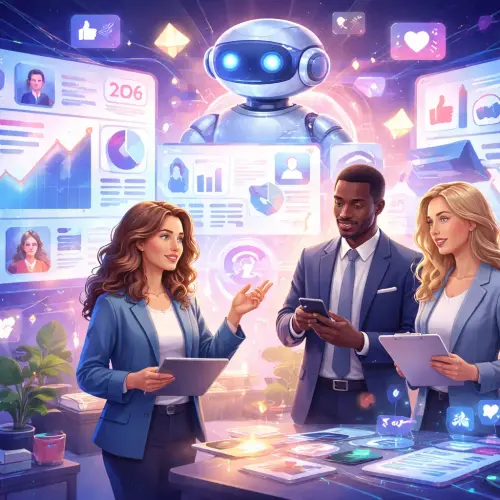
Why AI-Generated Social Content Trends Matter More Than Ever in 2026
Social media moves faster than any other marketing channel, and 2026 will be the year when AI stops being a behind-the-scenes helper and becomes a front-line creator. Audiences now expect content that feels tailored to their interests, posted at the exact right moment, and presented in a format that suits their mood. Marketers who ignore these AI content trends 2026 risk falling behind competitors who are already using machine learning to optimize every post. For a related guide, see 12 Short-Form Video Marketing Trends: Smart Moves to Avoid Falling Behind.
The trends listed here come from observing early adopters, platform updates, and shifting consumer behaviors. Each one has been tested by leading brands and offers a tangible advantage—whether that is higher engagement, lower cost per click, or stronger brand loyalty.
1. Hyper-Personalized Feeds Beyond Demographics
Personalization has moved past using a first name in a caption. In 2026, AI tools analyze browsing behavior, past engagement, and even the time of day a user is most active. The result is content that feels like it was made for one person, not a million followers.
How to implement it
Use AI content creation platforms that connect to your CRM or social analytics. Tools like Jasper or Copy.ai now integrate with customer data to generate variations of a single post for different audience segments. For example, a fitness brand can create one version for morning exercisers and another for evening yogis, using the same core visuals but different copy and calls to action.
Practical takeaway
Start segmenting your audience into at least three behavioral groups. Let AI generate three versions of each key post and test which resonates most with each segment.
2. Predictive Post Scheduling With AI
Posting at the right time has always been important, but AI-generated social content trends now allow you to predict the ideal publishing moment for every individual follower—not just your audience averaged together. Machine learning models analyze historical engagement data to forecast when each user is most likely to see and interact with your content.
Real-world example
A retail brand used a predictive scheduling tool and saw a 23% increase in click-through rates within two months. The algorithm learned that their audience engaged more during lunch breaks and late evenings, adjusting posts automatically.
Practical takeaway
Invest in a social media management tool that offers AI-powered scheduling. Re-evaluate your posting times every 30 days as the algorithm learns from new data. For a related guide, see Ai Influencers: 5 Smart AI Influencer Risks Every Marketer Must Avoid.
3. AI-Generated Video Scripts and Short Clips
Video remains the dominant content format, but creating it is time-intensive. AI now writes full video scripts, suggests visual hooks, and even generates short clips from long-form content. This trend is one of the most practical AI content trends 2026 for marketers who produce daily videos.
How to get started
Use a tool like Synthesia or Pictory to turn a blog post into a 60-second social video. The AI will select key sentences, add captions, and generate a voiceover. You just review and publish.
Practical takeaway
Repurpose your top-performing blog post as a video script. Aim to post at least one AI-generated short video per day on Reels, TikTok, or YouTube Shorts.
4. Synthetic Influencers Build Real Trust
Virtual personalities, fully generated by AI and managed by marketing teams, are no longer a novelty. By 2026, major brands will partner with synthetic influencers who maintain consistent messaging, never age, and can be controlled for brand safety. However, transparency is key—audiences must know they are interacting with an AI.
Practical takeaway
If your brand targets Gen Z or Gen Alpha, consider creating a single synthetic brand ambassador for a campaign. Disclose it clearly in the post caption and measure engagement against real influencer benchmarks.
5. Real-Time Content Adaptation Based on Sentiment
AI doesn’t just create content—it listens and adjusts. Sentiment analysis tools scan comments, shares, and even emoji usage to determine how a post is being received. If the sentiment turns negative, the AI can pause a campaign, change the messaging, or suggest a follow-up post to address concerns.
Practical takeaway
Set up a sentiment monitoring dashboard that connects to your social channels. Define automatic actions for extreme positive or negative sentiment, such as flagging a post for human review or boosting a well-received post.
6. Voice-Enabled Social Content Creation
Voice-to-text has improved dramatically, but 2026 goes further. AI can now generate a complete social media post from a voice memo. Marketers can dictate ideas on the go and receive polished drafts in seconds. This trend speeds up ideation and reduces typing fatigue.
Practical takeaway
Use a voice-to-content tool like Otter.ai or the voice feature in ChatGPT to record your ideas. Let AI polish the grammar and structure before you review. This cuts content creation time by 40% or more.
7. Ethical AI Tags and Transparency Labels
As AI-generated content becomes indistinguishable from human content, platforms will require disclosure. In 2026, expect mandatory tags like “Created with AI” on posts. Early adopters of transparent labeling will build stronger trust with audiences wary of deepfakes.
Practical takeaway
Add a simple line at the end of AI-generated posts: “This post was created with the help of AI.” Test whether your audience responds better to transparent labels versus no disclosure. Many early tests show higher engagement when brands are honest.
8. Multi-Modal Content From a Single Input
One blog post, one podcast episode, or one product description can now be transformed into dozens of social assets. AI tools extract quotes for text posts, generate audiograms, create infographics, and even produce short video teasers—all from the same source material.
Practical takeaway
Create one long-form piece of content each week (a blog, a video, or a podcast). Feed it into an AI multi-modal generator and schedule the resulting assets across all your social channels. Track which format performs best for each topic.
9. AI-Powered Community Management Bots
Beyond scheduling and creation, AI now handles first-line community interaction. Bots that understand context, tone, and brand voice can reply to comments, answer FAQs, and escalate complex questions to humans. This frees up your team for higher-level strategy.
Practical takeaway
Set up a community management bot that can handle at least 50% of routine inquiries. Monitor its performance weekly and update the training data to improve accuracy.
10. Custom AI Models Trained on Brand Voice
Generic AI writing assistants are being replaced by custom models fine-tuned on a brand’s historical content, tone guidelines, and product vocabulary. These proprietary models produce copy that sounds authentically like your brand, not like a generic AI.
Practical takeaway
If your brand produces more than ten posts per month, invest in a custom GPT or use a platform that allows fine-tuning on your existing content library. Start with a small dataset of your top 50 posts and expand from there.
AI-Generated Social Content Trends Comparison Table
| Trend | Primary Benefit | Ease of Implementation | Best For |
|---|---|---|---|
| Hyper-Personalized Feeds | Higher engagement | Medium | Brands with segmented audiences |
| Predictive Post Scheduling | Better timing | Low | All social marketers |
| AI Video Scripts | Faster video creation | Low | Video-heavy strategies |
| Synthetic Influencers | Brand control | High | Entertainment and lifestyle |
| Real-Time Sentiment Adaptation | Crisis prevention | Medium | Brands with active communities |
| Voice-Enabled Creation | Speed increase | Low | Busy content teams |
| Ethical AI Tags | Trust building | Low | All brands |
| Multi-Modal Generation | Content repurposing | Medium | Maximizing existing assets |
| AI Community Bots | Scalable support | Medium | High-volume social pages |
| Custom Voice Models | Consistent tone | High | Established brands with style guides |
Conclusion: Why Marketers Must Adopt These AI-Generated Social Content Trends Now
The window for early adoption is closing. By mid-2026, these trends will be standard practice for top-performing brands, and audiences will expect the level of personalization and speed that only AI can deliver. The key is to start small: pick one trend from this list that matches your team’s current skills and tools, run a controlled test for 30 days, measure the results, and expand from there.
Whether it’s predictive scheduling, synthetic influencers, or custom brand voice models, the impact of these AI content trends 2026 on engagement, efficiency, and brand trust is proven. Marketers who embrace them will lead the next wave of social media innovation. Those who wait will play catch-up.
Useful Resources
For deeper insights into AI in social media marketing, explore these trusted sources:
- Social Media Examiner – Regularly publishes case studies and expert advice on AI-driven social strategies.
- Harvard Business Review – Artificial Intelligence – Offers research-backed articles on how AI is transforming marketing operations.
Frequently Asked Questions About AI-generated social content trends
What are AI-generated social content trends in 2026?
They are the most effective ways marketers use artificial intelligence to plan, create, personalize, and optimize social media content at scale, based on platform updates and early adopter results.
How is AI used in social media content creation in 2026?
AI writes captions, scripts, and complete posts; generates images and short videos; schedules posts based on predictive analytics; and adapts content in real time based on audience sentiment.
Is AI-generated content safe for brand reputation?
Yes, when transparently disclosed and reviewed by humans before publishing. Brands that use clear AI labels often see higher trust from audiences.
Will AI replace social media managers in 2026?
No. AI automates repetitive tasks but cannot replace human creativity, strategy, empathy, and community relationship building. Managers will focus on higher-level decisions.
What is the cost of adopting AI social content tools?
Costs range from free tiers (limited posts) to $100–$500 per month for professional tools. Custom brand voice models can cost more upfront but save money long term.
How do synthetic influencers work?
Synthetic influencers are computer-generated characters controlled by a brand. They post, interact, and promote products just like human influencers but with full brand control.
What is predictive post scheduling?
It uses AI to analyze historical engagement data and determine the exact time each post will reach the most people in your target audience, increasing visibility and clicks.
How can AI personalize social content?
AI uses behavioral data like past clicks, time spent, and content preferences to tailor headlines, images, and calls to action for different segments of your audience.
Do I need technical skills to use AI for social media?
No. Most AI content tools have user-friendly dashboards and require only basic platform knowledge. Some tools offer one-click generation from a simple input.
What is an ethical AI tag?
It is a voluntary label indicating that content was created or assisted by AI. Some social platforms may soon require them, but early adoption builds trust.
Which social platforms are adopting AI content best?
Instagram, TikTok, and LinkedIn are leading in AI tool integration for creators and marketers. YouTube also offers AI-assisted scripting and thumbnail generation.
Can AI help with social media analytics?
Yes. AI tools can identify patterns in engagement, predict future performance, and suggest content improvements based on data from thousands of similar posts.
How do AI community bots interact with followers?
They use natural language processing to answer common questions, acknowledge comments, and escalate complex issues to human agents—all within minutes.
Is voice-enabled social creation accurate?
Yes. Modern AI voice-to-text systems achieve over 95% accuracy in English and many other languages, making dictation faster than typing for most professionals.
What content types benefit most from multi-modal AI?
Long-form blog posts, podcasts, webinars, and product descriptions produce the best multi-modal outputs: social text posts, infographics, audio clips, and video teasers.
How do I train a custom AI model on my brand voice?
Use a platform like GPT Fine-Tuning or Copy.ai’s brand voice feature. Upload at least 20–50 examples of your best content and let the AI learn your tone, vocabulary, and style.
Will AI content get penalized by algorithms in 2026?
Not if it is high-quality and valuable to users. Algorithms prioritize engagement and relevance, not the method of creation. Poor AI content, like poorly written human content, will be deprioritized.
How can small businesses use AI social trends?
Start with free or low-cost tools for predictive scheduling and caption generation. Focus on one trend at a time, test for 30 days, and expand based on results.
What is real-time sentiment adaptation?
It is an AI feature that monitors audience reactions to a post as they happen. If sentiment turns negative, the AI can pause the campaign, change copy, or alert a human moderator.
How do I measure the success of AI-generated social content?
Use the same metrics as human-created content: engagement rate, reach, click-through rate, conversion rate, and brand sentiment. Compare performance before and after AI adoption.