
AI search trends in 2026 are reshaping how content ranks and performs online. By aligning your strategy with AI-driven search, user intent, semantic SEO, AEO, and GEO, you can improve visibility, build authority, and drive sustainable organic growth.
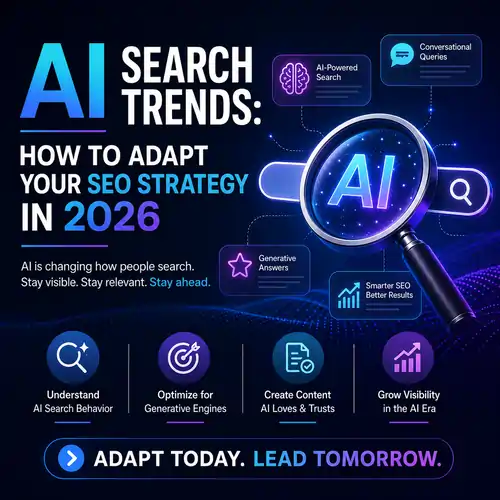
The world of search is evolving faster than ever. With the rise of AI-powered search engines, generative AI, and machine learning algorithms, traditional SEO tactics are no longer enough. In 2026, success depends on how well you adapt your strategy to align with AI search trends, user behavior, and contextual relevance.
Search engines are no longer just indexing pages—they are understanding meaning, predicting intent, and delivering direct answers. This shift demands a smarter, more human-focused approach to SEO.
What Are AI Search Trends?
AI search trends refer to the increasing use of artificial intelligence, natural language processing (NLP), and machine learning in search engines to deliver more accurate, personalized, and context-aware results.
These trends include:
- Generative AI search results
- Voice search optimization
- Conversational queries
- Entity-based search
- Semantic search
- Zero-click searches
Understanding these trends is essential for building a future-proof SEO strategy.
How AI is Transforming Search Engines
Search engines like Google are now powered by advanced AI systems such as:
- Google BERT (context understanding)
- RankBrain (machine learning ranking signals)
- MUM (Multitask Unified Model)
- AI-generated answers (SGE)
These technologies enable search engines to:
- Understand context instead of just keywords
- Interpret user intent more accurately
- Deliver direct answers
- Personalize search results
Key LSI Keywords for AI SEO in 2026
To align with semantic SEO, integrate these LSI keywords:
- AI-powered search
- search engine algorithms
- user intent optimization
- content relevance
- machine learning SEO
- predictive search
- voice search optimization
- conversational AI
- entity SEO
- zero-click search
- featured snippets
- topical authority
- content personalization
- search experience optimization (SXO)
Using these naturally enhances NLP optimization and ranking potential.
The Rise of Generative Engine Optimization (GEO)
GEO (Generative Engine Optimization) is the evolution of SEO for AI-driven platforms like ChatGPT, Google SGE, and other generative engines.
To optimize for GEO:
- Provide clear, structured content
- Use context-rich explanations
- Include entity relationships
- Write for AI understanding and summarization
GEO ensures your content is discoverable in AI-generated answers.
Answer Engine Optimization (AEO) in 2026
With the growth of voice assistants and AI summaries, AEO is more important than ever.
How to Optimize for AEO
- Use question-based headings
- Provide direct, concise answers
- Structure content for featured snippets
- Optimize for voice search queries
AEO increases your chances of appearing in zero-click results.
Semantic SEO and Entity-Based Optimization
Modern SEO is no longer keyword-centric—it is entity-driven.
What is Entity SEO?
Entity SEO focuses on concepts, relationships, and meaning rather than exact keywords.
Example:
Instead of just targeting “SEO,” you also include related entities like:
- search engines
- ranking factors
- content strategy
This improves contextual relevance and helps search engines understand your content deeply.
User Intent and Search Behavior in 2026
Understanding user intent is more critical than ever.
Types of Intent
- Informational intent
- Navigational intent
- Transactional intent
- Commercial intent
AI systems analyze behavior such as:
- Click patterns
- Time on page
- Interaction signals
Matching your content to intent improves both rankings and engagement.
Content Optimization for AI Search
1. Write for Humans and AI
Balance human readability with machine understanding.
2. Use Structured Content
- Clear headings
- Bullet points
- Logical flow
3. Focus on Depth and Value
Thin content no longer ranks. Provide comprehensive, authoritative insights.
4. Optimize for Featured Snippets
Answer questions directly to capture position zero.
Voice Search and Conversational Queries
Voice search continues to grow, driven by smart devices and AI assistants.
Optimization Tips
- Use natural language
- Include long-tail keywords
- Answer who, what, where, when, why questions
This aligns with conversational search patterns.
The Importance of Topical Authority
Building topical authority is essential for long-term SEO success.
How to Build It
- Create topic clusters
- Interlink related content
- Cover topics comprehensively
Search engines reward websites that demonstrate expertise.
User Experience (UX) and AI SEO
AI systems evaluate user experience signals.
Key factors include:
- Page speed
- Mobile optimization
- Navigation clarity
- Content readability
A strong UX improves both rankings and engagement.
Zero-Click Searches and SERP Evolution
More searches now end without clicks due to:
- Featured snippets
- AI summaries
- Knowledge panels
To adapt:
- Optimize for visibility, not just clicks
- Provide direct answers
- Build brand authority
Conversion Optimization in AI SEO
Traffic alone is not enough. You need conversions.
Strategies
- Align content with user journey stages
- Use strong CTAs
- Provide trust signals
This ensures your SEO efforts drive real results.
Measuring SEO Success in 2026
Track key metrics:
- Organic traffic
- CTR (click-through rate)
- Engagement rate
- Conversion rate
- Keyword rankings
These indicate whether your strategy aligns with AI search trends.
Common Mistakes to Avoid
- Ignoring AI-driven changes
- Over-optimizing keywords
- Neglecting user intent
- Publishing thin content
- Ignoring UX
Avoiding these ensures sustainable growth.
The Future of AI SEO
Looking ahead, SEO will continue evolving toward:
- AI-first indexing
- hyper-personalized search results
- voice-first interactions
- predictive search behavior
Content that is valuable, authentic, and context-rich will dominate.
Frequently Asked Questions
1. What are AI search trends?
AI search trends refer to the use of artificial intelligence in search engines. They improve understanding of user intent and context. This leads to more accurate results.
2. How does AI affect SEO?
AI changes how search engines rank content. It focuses on relevance and user experience. This requires smarter optimization strategies.
3. What is GEO in SEO?
GEO stands for Generative Engine Optimization. It focuses on optimizing content for AI-generated results. It improves visibility in AI platforms.
4. What is AEO?
AEO focuses on providing direct answers to user queries. It helps content appear in snippets and voice search. This increases visibility.
5. What is semantic SEO?
Semantic SEO focuses on meaning and context. It uses related terms and entities. This improves content relevance.
6. How do I optimize for AI search?
Use structured content and natural language. Focus on user intent. Provide valuable information.
7. What is voice search optimization?
Voice search optimization targets conversational queries. It uses natural language. This improves accessibility.
8. What are zero-click searches?
Zero-click searches provide answers directly in SERPs. Users do not need to click links. This changes SEO strategies.
9. How does NLP impact SEO?
NLP helps search engines understand language. It improves context and relevance. This enhances rankings.
10. What is topical authority?
Topical authority shows expertise in a subject. It improves trust and rankings. It is built through comprehensive content.
11. How important is user intent?
User intent is critical for SEO success. Matching content to intent improves rankings. It also increases engagement.
12. What is entity SEO?
Entity SEO focuses on concepts rather than keywords. It improves context understanding. This enhances relevance.
13. How do I improve CTR?
Write compelling titles and descriptions. Match user intent. Use relevant keywords.
14. What is SXO?
Search Experience Optimization focuses on user experience. It combines SEO and UX. This improves engagement.
15. How often should I update content?
Update content regularly to maintain relevance. Refresh outdated information. This improves rankings.
16. What is predictive search?
Predictive search anticipates user queries. It uses AI and data. This improves search efficiency.
17. How does UX affect SEO?
UX impacts engagement and rankings. Good UX improves user satisfaction. Poor UX increases bounce rates.
18. What is conversational AI?
Conversational AI enables natural interactions. It powers voice search and chatbots. This changes search behavior.
19. How do I build trust in SEO?
Provide accurate and helpful content. Be transparent and consistent. Use credible sources.
20. What is the future of SEO?
SEO will focus on AI, intent, and context. Content must be valuable and relevant. Human-first strategies will dominate.
Disclaimer
This content is for informational and educational purposes only. While it follows current SEO, AEO, and GEO best practices, search engine algorithms and AI systems are constantly evolving. Results may vary depending on industry, competition, and implementation. Always conduct your own research, testing, and validation before applying these strategies.

