
Search visibility vs traffic highlights a major shift in modern SEO: it’s no longer just about clicks, but about being seen across search engines, AI results, and SERP features. By focusing on search visibility, brand presence, and user intent, you can build authority, trust, and long-term organic growth.
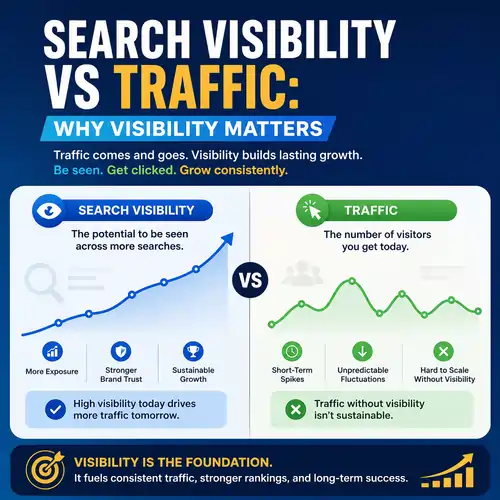
For years, SEO success was measured by one primary metric: traffic. The more clicks your website received, the better your strategy was considered. However, in today’s evolving digital ecosystem, this mindset is outdated. With the rise of AI-driven search, zero-click searches, and SERP features, search visibility has become more important than traffic itself.
Modern SEO is no longer just about getting users to click—it’s about ensuring your content is seen, recognized, and trusted across multiple touchpoints.
What is Search Visibility?
Search visibility refers to how often and how prominently your content appears in search engine results pages (SERPs), regardless of whether users click.
It includes visibility in:
- Featured snippets
- People Also Ask (PAA)
- Knowledge panels
- AI-generated answers
- Local packs
- Image and video results
Unlike traditional organic traffic, visibility focuses on presence, not just clicks.
What is Organic Traffic?
Organic traffic refers to users who visit your website through unpaid search engine results. It has traditionally been the main KPI in SEO performance.
However, traffic alone does not reflect:
- Brand awareness
- Authority
- SERP dominance
- User perception
This is why relying solely on traffic can be misleading.
The Shift from Traffic to Visibility
Search behavior has changed significantly due to:
- AI-powered search engines
- voice search optimization
- zero-click searches
- instant answers in SERPs
Users now often get answers without clicking a website. This makes search visibility optimization more valuable than ever.
Key LSI Keywords for Visibility SEO
To optimize for modern SEO, include these LSI keywords:
- search visibility optimization
- SERP features
- zero-click search
- brand awareness SEO
- impression share
- click-through rate (CTR)
- search engine algorithms
- user intent optimization
- content relevance
- topical authority
- semantic SEO
- entity SEO
- AI search optimization
- search experience optimization (SXO)
Using these naturally improves both NLP optimization and ranking signals.
Why Search Visibility Matters More Than Traffic
1. Zero-Click Searches Are Increasing
More than half of searches now end without clicks. Users get answers directly from:
- Featured snippets
- AI summaries
- Knowledge panels
This means your brand can gain exposure without traffic.
2. Visibility Builds Brand Authority
When users repeatedly see your content in SERPs, it builds:
- Trust
- Recognition
- Authority
Even without clicks, visibility strengthens your brand presence.
3. Visibility Influences Future Clicks
Users often click brands they recognize. High visibility leads to:
- Higher CTR (click-through rate)
- More returning users
- Increased trust
4. AI Search Prioritizes Visibility
With AI-generated answers, search engines summarize content from multiple sources. If your content is visible and structured properly, it gets included in these summaries.
SEO + AEO + GEO Integration for Visibility
SEO (Search Engine Optimization)
Focus on:
- keyword optimization
- technical SEO
- internal linking
- content structure
AEO (Answer Engine Optimization)
To improve visibility:
- Provide direct answers
- Use question-based headings
- Optimize for snippets
GEO (Generative Engine Optimization)
For AI visibility:
- Write context-rich content
- Use structured data
- Focus on clarity and depth
SERP Features and Their Impact
Modern SERPs are filled with features that increase visibility:
- Featured snippets
- People Also Ask
- Video carousels
- Image packs
- Local results
Optimizing for these features increases your search visibility score.
How to Optimize for Search Visibility
1. Target SERP Features
Structure content to appear in:
- Snippets
- FAQs
- Lists
2. Use Structured Data
Schema markup improves:
- Rich results
- AI understanding
- Visibility in SERPs
3. Optimize for Entities
Use entity SEO to help search engines understand context.
4. Focus on Topical Authority
Cover topics deeply using:
- topic clusters
- internal linking
- content hubs
Search Experience Optimization (SXO)
SXO (Search Experience Optimization) combines SEO and UX.
It focuses on:
- User experience
- Content relevance
- Engagement
Better experience leads to stronger visibility signals.
Measuring Search Visibility
Track these metrics:
- Impressions (Google Search Console)
- SERP position
- Visibility score
- CTR (click-through rate)
- Brand mentions
These metrics give a clearer picture than traffic alone.
Visibility vs Traffic: Key Differences
| Factor | Visibility | Traffic |
|---|---|---|
| Focus | Presence in SERPs | Clicks |
| Value | Brand awareness | Visits |
| Impact | Long-term growth | Short-term gains |
| Measurement | Impressions | Sessions |
The Role of User Intent | Search Visibility vs Traffic
Understanding user intent ensures your content appears in the right context.
Types include:
- Informational
- Navigational
- Transactional
- Commercial
Matching intent improves both visibility and engagement.
Voice Search and AI Visibility
Voice search and AI assistants prioritize:
- Direct answers
- Conversational language
- Structured content
Optimizing for voice search optimization increases visibility in these platforms.
Conversion Without Clicks
Even without traffic, visibility can lead to conversions through:
- Brand recall
- Direct searches
- Social media engagement
This is known as indirect conversion impact.
Common Mistakes to Avoid
- Focusing only on traffic
- Ignoring SERP features
- Not optimizing for AI
- Overlooking user intent
- Neglecting structured data
The Future of SEO: Visibility First
SEO is moving toward:
- AI-first search
- zero-click experiences
- entity-based ranking
- personalized results
Content that is visible, relevant, and authoritative will win.
Frequently Asked Questions
1. What is search visibility?
Search visibility refers to how often your content appears in search results. It includes impressions and SERP placements. It is not limited to clicks.
2. How is visibility different from traffic?
Visibility measures presence, while traffic measures clicks. Visibility builds awareness. Traffic reflects user actions.
3. Why is visibility important in SEO?
Visibility builds brand recognition and authority. It increases trust among users. It also influences future clicks.
4. What are zero-click searches?
Zero-click searches provide answers directly in SERPs. Users do not need to click links. This increases the importance of visibility.
5. How do I improve search visibility?
Optimize for SERP features and user intent. Use structured data. Create high-quality content.
6. What is AEO?
AEO focuses on answering questions directly. It improves visibility in snippets. It supports voice search.
7. What is GEO?
GEO optimizes content for AI-generated results. It improves discoverability. It supports modern search engines.
8. What are SERP features?
SERP features include snippets, PAA, and knowledge panels. They increase visibility. They reduce reliance on clicks.
9. How does AI affect visibility?
AI summarizes content directly in search results. This reduces clicks. It increases the importance of being visible.
10. What is SXO?
SXO combines SEO and user experience. It improves engagement. It enhances visibility.
11. How do I measure visibility?
Track impressions and rankings. Use Google Search Console. Analyze SERP presence.
12. Does visibility lead to conversions?
Yes, indirectly. It builds brand awareness. It influences future decisions.
13. What is topical authority?
Topical authority shows expertise in a subject. It improves rankings. It increases visibility.
14. How does user intent impact visibility?
Matching intent improves relevance. It increases chances of appearing in SERPs. It boosts engagement.
15. What is entity SEO?
Entity SEO focuses on concepts instead of keywords. It improves context. It enhances visibility.
16. How does voice search affect SEO?
Voice search prioritizes direct answers. It reduces clicks. It increases visibility importance.
17. What is semantic SEO?
Semantic SEO focuses on meaning and relationships. It improves relevance. It supports modern algorithms.
18. Can I rank without traffic?
Yes, visibility does not require clicks. Your content can still appear in SERPs. This builds authority.
19. What is CTR?
CTR measures clicks relative to impressions. It indicates performance. It connects visibility and traffic.
20. What is the future of SEO?
SEO will focus on visibility, AI, and intent. Content must be relevant and structured. Authority will matter most.
Disclaimer
This content is for informational and educational purposes only. While it follows current SEO, AEO, and GEO best practices, search engine algorithms and AI systems are constantly evolving. Results may vary depending on industry, competition, and implementation. Always conduct your own testing, research, and analysis before applying these strategies.

