reduce CPC in competitive niches Key Takeaways
Running ads in a crowded market often feels like an auction where every click costs a small fortune.
- Focus on long-tail keywords and negative keyword lists to avoid bidding wars on expensive generic terms.
- Improve your Quality Score by refining ad copy and landing page relevance—this directly lowers your actual cost per click.
- Leverage smart bidding strategies like Target CPA and ad scheduling to capture high-intent clicks at lower prices.
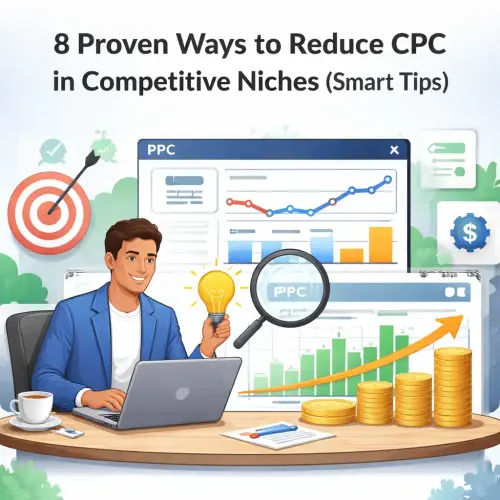
Why Understanding How to Reduce CPC in Competitive Niches Matters
When you operate in a competitive niche—whether that’s insurance, home services, SaaS tools, or online education—every advertiser is chasing the same audience. Bidding wars drive up your lower cost per click goals seem impossible. But PPC optimization isn’t just about raising bids. By adjusting your strategy, you can actually reduce CPC in competitive niches while maintaining strong ad positions. For a related guide, see 9 Broad Match Keyword Strategies That Work.
The tricks aren’t secret. They require a disciplined approach to keyword selection, ad relevance, and bid management. Below are eight proven methods, each explained with a concrete example to help you implement them immediately.
1. Mine Long-Tail Variations of High Competition Keywords
Instead of targeting the most expensive broad match terms, drill down into specific, intent-rich phrases. These have lower competition and often convert better.
Example: Instead of bidding on “emergency plumber,” try “emergency plumber in Austin TX with same-day service.” The latter costs a fraction per click because it’s more specific and fewer advertisers compete for it.
How to Find Profitable Long-Tail Terms
Use Google Ads Keyword Planner or a tool like SEMrush to filter keywords by low competition and moderate search volume. Look for question-based queries and local modifiers (city, state, “near me”). For a related guide, see 8 Google Ads Search Term Changes: Proven Ways to Adapt.
2. Implement a Ruthless Negative Keyword Strategy
Negative keywords stop your ads from showing on irrelevant searches that waste budget and inflate your cost per click. In competitive niches, every wasted click hurts your overall ROI.
Example: A SaaS company selling project management software adds “free,” “template,” and “download” as negative keywords to avoid users who aren’t ready to purchase a subscription.
Regular Maintenance Matters
Review your search terms report weekly. Add new negative keywords as you spot irrelevant queries. This keeps your campaigns focused and lowers overall CPC over time.
3. Boost Your Quality Score Through Ad Relevance
Google rewards relevant ads with higher Quality Scores, which directly reduce CPC in competitive niches. The formula is simple: write ads that match the searcher’s intent and lead to a landing page that delivers on the promise.
Example: An ad for “affordable health insurance” should take the user to a page comparing low-cost plans, not the homepage of an insurance broker. When the landing page directly addresses the query, click-through rates rise and cost-per-click drops.
Actionable Quality Score Checks
- Include the exact keyword in your headline and description.
- Use ad extensions (site links, callouts) to improve click-through rates.
- Ensure landing page load time is under three seconds and mobile-friendly.
4. Leverage Smart Bidding with Target CPA or ROAS
Manual bidding in competitive auctions can lead to overpaying. Automated smart bidding strategies use machine learning to adjust bids in real time, helping you lower cost per click while hitting conversion goals.
Example: Set a Target CPA of $30 for a lead generation campaign. The algorithm will automatically lower bids for clicks unlikely to convert, reducing wasted spend on expensive terms that don’t produce results.
Start with a Comfortable Target
Begin with your historical average CPA, then gradually decrease it by 10–15% per week. Monitor volume to ensure you don’t sacrifice too many conversions.
5. Schedule Ads During Your Audience’s Peak Hours
Running ads 24/7 in a competitive niche means you’re paying for clicks during low-conversion times. Ad scheduling lets you show ads only when your audience is most active and ready to buy.
Example: A B2B software company runs ads only on weekdays from 9 AM to 5 PM. Weekends and late nights are paused, dramatically reducing wasted ad spend and lowering average CPC.
How to Find Your Best Hours
Review your Google Ads hour-of-day report. Identify the three to four hours with the highest conversion rates and schedule your ads to run one hour before and during those windows.
6. Use Audience Targeting Layers to Filter Out Tire-Kickers
Broad keyword targeting in competitive niches attracts many visitors who never convert. By layering audience segments—such as in-market audiences, remarketing lists, or custom intent audiences—you ensure your ads reach people with higher purchase intent.
Example: A car dealership bidding on “used SUV” adds a layer of “in-market for SUVs” audience. This narrows impressions to users actively researching, raising conversion rates and lowering cost per click on each conversion.
Combine with Observation Mode
First, set audience targeting to “observation” to see which segments perform best. Once you identify high-converting groups, switch to “targeting” to focus your budget on those users.
7. Test Different Match Types for High Competition Keywords
Phrase match and exact match often yield lower CPC than broad match because they give you more control over which searches trigger your ads. In competitive niches, broad match can drain your budget quickly.
Example: A law firm bids on “personal injury lawyer” using exact match. The ad only shows for that exact phrase (or close variants), avoiding searches like “how to find a lawyer” that don’t indicate purchase intent.
Gradual Expansion Strategy
Start with exact match for your core terms. Once you’ve gathered conversion data, expand to phrase match while monitoring search terms to maintain control.
8. Optimize Landing Pages for Speed and Relevance
Your landing page experience is a major Quality Score factor. A slow or irrelevant landing page forces you to pay more per click because Google sees a poor user experience.
Example: An e-commerce store selling hiking gear ensures that each ad for “waterproof hiking boots” leads directly to the waterproof boots category, not the homepage. The page loads in under two seconds and includes clear calls-to-action.
Checklist for a High-Performing Landing Page
- Page load time under 2.5 seconds (test with Google PageSpeed Insights).
- Clear headline matching the ad copy.
- Minimal navigation distractions—focus on one conversion goal.
- Mobile-responsive design with easy-to-tap buttons.
Common Mistakes That Prevent You From Reducing CPC
Even with the right strategies, advertisers often slip up. Here are three pitfalls to avoid when trying to reduce CPC in competitive niches:
- Ignoring the search terms report — Without regular reviews, your ads show for irrelevant queries that spike costs.
- Using overly broad match types — Broad match in competitive niches invites unwanted clicks and high CPC.
- Neglecting mobile optimization — More than half of clicks come from mobile devices. A poor mobile experience hurts Quality Score.
Useful Resources
Dive deeper into these topics with guides from trusted industry sources:
- Google Ads Help: About Quality Score — Official documentation on how Quality Score is calculated and improved.
- Search Engine Land: Negative Keywords Guide — A comprehensive article on building and managing negative keyword lists.
Frequently Asked Questions About reduce CPC in competitive niches
What is the fastest way to reduce CPC in competitive niches ?
Improving your Quality Score by making ads and landing pages more relevant typically delivers the quickest results. A higher Quality Score directly lowers your cost per click because Google rewards you with a discount. For a related guide, see 10 Quality Score Tips to Cut PPC Costs.
Does lowering my bid automatically reduce CPC ?
No, lowering your bid can reduce your average CPC, but it may also decrease your ad position and click volume. Instead, focus on improving relevance and targeting to lower costs without sacrificing visibility.
How do long-tail keywords help lower cost per click ?
Long-tail keywords have lower competition because fewer advertisers bid on them. This reduced competition directly leads to a lower cost per click while often attracting more qualified leads.
Can negative keywords really reduce CPC that much?
Yes, negative keywords prevent your ads from appearing on irrelevant searches. By eliminating clicks that won’t convert, your overall campaign efficiency improves and your average CPC drops.
What is a good Quality Score to aim for?
A Quality Score of 8 or above out of 10 is considered excellent. Scores of 7 are decent, while anything below 6 indicates room for improvement in ad relevance, landing page experience, or CTR.
Should I use broad match or exact match for competitive keywords?
Start with exact match to maintain control over costs. Once you have conversion data, you can test phrase match. Broad match in competitive niches often leads to wasted spend.
Does ad scheduling really lower CPC?
Yes, ad scheduling ensures your budget is spent during hours when conversions are highest. By pausing ads during low-performing times, your overall average CPC decreases because you’re not paying for unproductive clicks.
How can I find the best long-tail keywords for my niche?
Use keyword research tools like Google Keyword Planner, SEMrush, or Ahrefs. Filter by low competition and moderate volume. Look for question-based queries and location-specific phrases.
What is Target CPA bidding and how does it affect CPC?
Target CPA is a Google Ads smart bidding strategy that automatically adjusts bids to get as many conversions as possible at your target cost per acquisition. It often lowers average CPC by reducing bids on low-intent clicks.
Does landing page speed really matter for CPC?
Absolutely. Google uses landing page experience as a Quality Score factor. A fast, relevant page improves your Quality Score, which directly lowers your cost per click.
How often should I review my negative keyword list?
Review your search terms report at least once a week. Add new negative keywords as you spot irrelevant queries. In highly competitive niches, daily checks during the first month can be beneficial.
Can remarketing help lower CPC in competitive niches ?
Remarketing itself doesn’t directly lower keyword CPC, but it improves overall conversion rates. When you combine remarketing with audience targeting, you often see a lower cost per conversion, which makes your overall campaign more efficient.
What is the relationship between CTR and CPC?
Higher click-through rates generally lead to a higher Quality Score, which lowers your cost per click. Compelling ad copy that earns clicks is one of the easiest ways to reduce CPC.
Should I use ad extensions to reduce CPC ?
Yes, ad extensions like sitelinks and callouts increase your ad’s visibility and CTR. A higher CTR improves Quality Score, which in turn lowers your cost per click.
How do I set up audience targeting for PPC?
In Google Ads, go to the “Audiences” tab under your campaign. Choose “In-market,” “Affinity,” or “Custom intent” segments relevant to your product. Start with observation mode to gather data before switching to targeting.
Can I reduce CPC without losing traffic?
Yes, by focusing on long-tail keywords, improving Quality Score, and using smart bidding, you can often lower your average CPC while maintaining or even increasing targeted traffic.
What is the ideal landing page conversion rate for lowering CPC?
There is no magic number, but a landing page with a conversion rate above 5% typically indicates strong relevance. Higher conversion rates mean you can afford to bid less per click while still hitting your ROAS goals.
How do I know if my niche is too competitive for PPC?
If your average CPC is more than 50% of your profit margin per conversion, you may need to adjust your strategy. Extremely high competition doesn’t mean you can’t succeed, but you’ll need the tactics listed here to stay profitable.
What is the best bidding strategy for a limited budget?
For a limited budget, start with manual CPC or enhanced CPC (ECPC). These give you control over max bids while Google optimizes for conversions. As you gather data, consider switching to Target CPA.
How do I measure success when trying to reduce CPC ?
Track both average CPC and cost per conversion. A lower CPC is good, but the goal is to maintain or improve conversion rates while spending less. Use campaign-level conversion tracking to monitor both metrics.