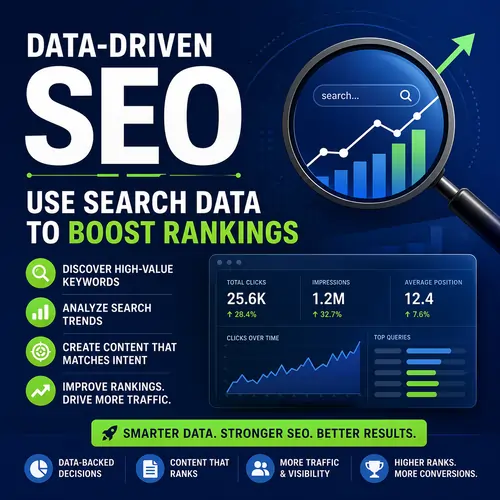
Data-driven SEO focuses on using search data, analytics insights, and user behavior metrics to guide content strategy and improve rankings. By leveraging keyword data, search intent analysis, and performance tracking, businesses can create optimized content that ranks higher, attracts organic traffic, and adapts to evolving AI-powered search engines.
Data-Driven SEO: Use Search Data to Boost Rankings 2
What is Data-Driven SEO?
Data-driven SEO is the practice of using search data analytics to guide decisions about content, keywords, and optimization strategies.
As explained in Google’s guide on How Search Works, search engines evaluate content based on context, intent, and user behavior signals—not just keywords.
It involves:
Keyword research data
Search intent analysis
User behavior metrics
Content performance tracking
Technical SEO data insights
Why Data Matters in SEO
Search engines rely on data to rank content, and you should too.
Research from Ahrefs and SEMrush shows that data-backed strategies consistently outperform guess-based optimization.
Internal linking should be guided by performance data.
Google explains in Search Central documentation that internal links help search engines understand relationships between pages.
Technical SEO and Data Insights
Technical optimization is data-driven.
Focus on:
Page speed
Mobile usability
Crawlability
Measuring SEO Success
Track performance using:
Organic traffic
Keyword rankings
User engagement
Conversions
Data ensures continuous improvement.
Common Mistakes in Data-Driven SEO
Ignoring data insights
Using outdated metrics
Overanalyzing without action
Focusing only on traffic
According to SEMrush research, poor data interpretation leads to weak SEO performance.
Future of Data-Driven SEO
SEO is becoming:
AI-driven
Data-centric
User-focused
Content must be:
Conclusion
Data-driven SEO is essential for long-term success. By leveraging search data, analytics insights, and user behavior metrics, you can create content that consistently ranks and performs.
The integration of SEO, GEO, AEO, and NLP optimization ensures your strategy is aligned with modern search engines and AI systems.
Frequently Asked Questions
1. What is data-driven SEO?
Data-driven SEO uses real data to guide optimization decisions. It relies on analytics and search insights. This improves accuracy and performance.
2. Why is data important in SEO?
Data helps identify what works and what doesn’t. It improves decision-making. This leads to better rankings.
3. What tools are used in data-driven SEO?
Common tools include analytics and keyword platforms. They provide insights into performance. This helps refine strategies.
4. What is search intent?
Search intent defines user goals. It helps align content with needs. This improves rankings.
5. What are LSI keywords?
LSI keywords are related terms. They improve context. This enhances SEO.
6. How does data improve content?
Data shows what users engage with. It helps optimize content. This improves performance.
7. What is GEO in SEO?
GEO focuses on AI search optimization. It uses structured data. This improves AI visibility.
8. What is AEO?
AEO focuses on answering queries. It improves snippet visibility. It supports voice search.
9. What is NLP in SEO?
NLP helps search engines understand language. It improves context. This enhances rankings.
10. How often should data be analyzed?
Regular analysis is recommended. It keeps strategies updated. This improves results.
11. What is keyword research?
Keyword research identifies search terms. It guides content creation. This improves SEO.
12. What is content gap analysis?
It identifies missing topics. It helps create new content. This improves coverage.
13. How does competitor analysis help?
It reveals opportunities. It shows what works. This improves strategy.
14. What is technical SEO data?
It includes site performance metrics. It helps improve usability. This boosts rankings.
15. How does internal linking help SEO?
It connects pages. It improves navigation. It boosts rankings.
16. What is organic traffic?
Organic traffic comes from search engines. It reflects SEO success. It is valuable for growth.
Bounce rate shows user behavior. High rates indicate issues. It affects SEO.
19. What is conversion rate?
Conversion rate measures actions. It reflects business success. It is a key metric.
20. What is the future of SEO?
SEO will rely more on data and AI. Content must be optimized. This ensures long-term success.
Disclaimer
This article is for educational and informational purposes only. SEO strategies, search engine algorithms, and data analytics methodologies evolve continuously due to frequent updates from platforms like Google and advancements in artificial intelligence. While the techniques and recommendations shared in this guide are based on current best practices, industry research, and widely accepted SEO principles, actual results may vary depending on your niche, competition level, implementation quality, and interpretation of data.
Always validate your SEO strategies using real performance metrics, test different approaches, and continuously refine your methods based on user behavior, analytics insights, and the latest search engine guidelines. For sustainable long-term success, it is essential to stay updated with official documentation, trusted SEO resources, and emerging trends in AI-driven search and data analysis.
Baby Ann Diaz is an SEO and digital marketing practitioner behind SocialBaddie.com. She documents SEO, social media, PPC, and web systems through real projects, lab notes, and hands-on experimentation—focusing on how digital marketing actually works, not how it’s usually sold.
What is Data-Driven SEO? Data-driven SEO is the practice of using search data analytics to guide decisions about content, keywords, and optimization strategies. As explained