
AI-optimized content focuses on structuring information so both search engines and AI systems can easily understand, extract, and present it. By combining semantic SEO, clear formatting, intent-driven writing, and structured data, content becomes more discoverable, ranks higher, and performs well in AI-generated results, featured snippets, and voice search.
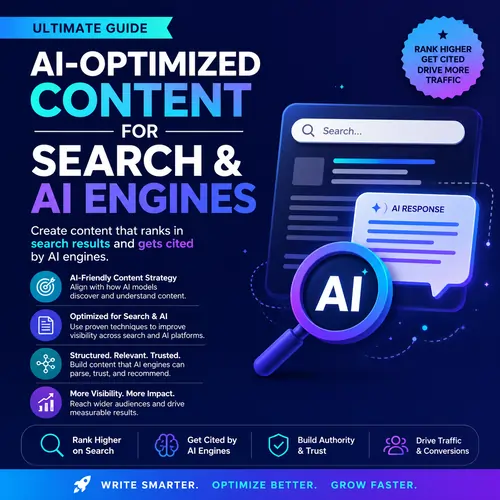
Creating AI-optimized content is no longer just an advanced tactic—it’s a necessity in modern SEO. With the rise of AI-powered search engines, generative search experiences, and voice assistants, content must be structured for both humans and machines.
According to Google’s Search Quality Evaluator Guidelines, content that demonstrates experience, expertise, and trustworthiness is more likely to rank consistently. This highlights the importance of combining SEO, GEO (Generative Engine Optimization), and AEO (Answer Engine Optimization).
What is AI-Optimized Content?
AI-optimized content refers to content designed to be easily understood by both search engines and AI systems. It uses structured formatting, semantic language, and clear intent signals.
As explained in Google’s official guide on How Search Works, modern search engines evaluate context, relationships, and user behavior—not just keywords.
Key components include:
- Semantic SEO
- Content structure optimization
- Natural language processing (NLP) alignment
- Entity-based optimization
- Structured data implementation
Why AI Optimization Matters in SEO
Search engines rely heavily on machine learning algorithms and NLP models to interpret content.
Research from Ahrefs and SEMrush shows that content with strong structure and topical relevance consistently ranks higher.
Benefits of AI-Optimized Content:
- Higher search engine rankings
- Increased organic traffic
- Better visibility in AI-generated summaries
- Improved featured snippet performance
- Enhanced voice search optimization
Understanding Search Intent for AI Optimization
To create content that ranks and gets selected by AI, you must align with search intent:
- Informational intent
- Navigational intent
- Transactional intent
- Commercial intent
Google’s Helpful Content System prioritizes content written for people first, reinforcing the importance of intent-driven writing.
The Role of Semantic SEO in AI Content
Semantic SEO ensures your content covers topics comprehensively using related concepts and entities.
Key Elements:
- LSI keywords
- Entity-based keywords
- Topic relevance
- Contextual relationships
Examples of LSI Keywords:
- content optimization
- AI search engines
- search engine ranking factors
- organic traffic growth
- user intent optimization
Using these naturally improves NLP optimization and content depth.
Structuring Content for AI and Search Engines
Content structure plays a major role in AI extraction and search ranking.
Best Practices:
1. Use Clear Headings (H1-H3)
Google’s SEO Starter Guide recommends proper heading structure to improve readability and indexing.
2. Write Short, Clear Paragraphs
AI systems prefer concise and digestible information.
3. Use Lists and Bullet Points
These improve readability and increase chances of appearing in featured snippets.
4. Add Direct Answers
This supports Answer Engine Optimization (AEO) and improves snippet eligibility.
GEO: Optimizing for AI-Generated Search
Generative Engine Optimization (GEO) focuses on making content AI-friendly.
GEO Best Practices:
- Provide clear definitions
- Use structured formatting
- Maintain topic consistency
- Include context-rich explanations
AI systems like Google SGE prioritize structured content that can be easily summarized.
AEO: Answer Engine Optimization
Answer Engine Optimization (AEO) ensures your content is selected for direct answers.
Strategies:
- Use question-based headings
- Provide concise answers
- Include FAQ sections
- Optimize for voice queries
Research from Backlinko highlights how structured answers improve visibility in voice search.
NLP Optimization for Better Rankings
Natural Language Processing (NLP) allows search engines to interpret human language.
Tools like the Google NLP API help analyze entities, sentiment, and content structure.
NLP Best Practices:
- Write naturally
- Avoid keyword stuffing
- Use conversational tone
- Include synonyms and variations
Content Depth and Topical Coverage
AI systems prefer comprehensive content over shallow articles.
According to Moz’s Beginner Guide to SEO, in-depth content improves both rankings and user trust.
Focus on:
- Covering all subtopics
- Providing detailed explanations
- Answering related questions
Internal Linking for AI Understanding
Internal linking strengthens content relationships.
Google explains in Search Central documentation that internal links help search engines understand site structure.
Benefits:
- Improves crawlability
- Enhances topic connections
- Distributes authority
External Linking and Credibility
Linking to authoritative sources strengthens E-E-A-T signals.
Examples:
These references improve credibility and trustworthiness.
Content Formatting for AI Extraction
AI systems prefer structured formats such as:
- Lists
- Definitions
- Step-by-step guides
This increases the chances of appearing in AI-generated answers.
Measuring AI Content Performance
Track performance using:
- Organic traffic
- Keyword rankings
- Click-through rate
- Time on page
Use tools like:
Common Mistakes in AI Content Optimization
- Overusing keywords
- Ignoring structure
- Writing for bots instead of users
- Lack of depth
- Poor formatting
According to SEMrush research, poorly structured content struggles to maintain rankings.
Future of AI-Optimized Content
The future of SEO is driven by:
- AI search engines
- Voice assistants
- Context-based ranking
Content must be:
Conclusion
Creating AI-optimized content requires balancing human readability with machine understanding. By applying semantic SEO, GEO, AEO, and NLP strategies, you can build content that ranks and gets selected by AI systems.
The goal is not just ranking—it’s becoming the preferred source for both users and machines.
Frequently Asked Questions
1. What is AI-optimized content?
AI-optimized content is structured to be understood by both users and machines. It uses semantic SEO and clear formatting. This improves visibility across search and AI platforms.
2. How does AI affect SEO?
AI changes how search engines interpret content. It focuses on intent and context rather than keywords. This improves search accuracy and relevance.
3. What is GEO in SEO?
GEO (Generative Engine Optimization) focuses on AI-friendly content. It ensures content is structured and easy to extract. This helps AI systems generate summaries.
4. What is AEO?
AEO (Answer Engine Optimization) targets direct answers. It improves chances of appearing in featured snippets. It supports voice search optimization.
5. What is semantic SEO?
Semantic SEO focuses on meaning rather than keywords. It uses related terms and concepts. This aligns with modern algorithms.
6. What are LSI keywords?
LSI keywords are related search terms. They help improve context. They enhance content relevance.
7. Why is structure important?
Content structure improves readability. It helps AI extract information. It boosts ranking potential.
8. How does NLP improve SEO?
NLP helps search engines understand language. It improves context recognition. This enhances rankings.
9. What is search intent?
Search intent defines user goals. Aligning content with it improves engagement. It boosts SEO performance.
10. Can AI content rank?
Yes, if it provides value. Quality and clarity matter. Human editing improves results.
11. How long should AI content be?
Long-form content performs better. It provides depth and authority. This improves rankings.
12. What tools help optimize content?
SEO tools provide insights. They help refine strategies. Data improves results.
13. Is keyword density important?
Not as much today. Natural language matters more. Overuse can harm rankings.
14. What is content clustering?
Content clustering groups related topics. It improves structure and relevance. It builds authority.
15. How often should content be updated?
Regular updates keep content fresh. This improves rankings. It maintains relevance.
16. What is internal linking?
Internal links connect pages. They improve navigation and SEO. They distribute authority.
17. What is external linking?
External links point to credible sources. They build trust. They improve credibility.
18. What is voice search optimization?
Voice search uses natural queries. It requires clear answers. It supports AEO.
19. What is the biggest mistake in AI SEO?
Ignoring user intent is a major mistake. Content must provide value. Relevance is critical.
20. What is the future of SEO?
SEO is becoming AI-driven. Content must be structured and helpful. Authority will matter more.
Disclaimer
This article is for educational and informational purposes only. SEO strategies, AI systems, and search engine algorithms evolve continuously due to frequent updates from platforms like Google and other technology providers. While the techniques and recommendations shared in this guide are based on current best practices, industry research, and publicly available resources, actual results may vary depending on factors such as competition, niche, implementation quality, and algorithm changes.
Always test your strategies, validate outcomes using real performance data, and continuously refine your approach based on user behavior, analytics insights, and the latest search engine guidelines. For long-term success, it is essential to stay updated with official documentation, trusted SEO resources, and evolving AI search trends.

