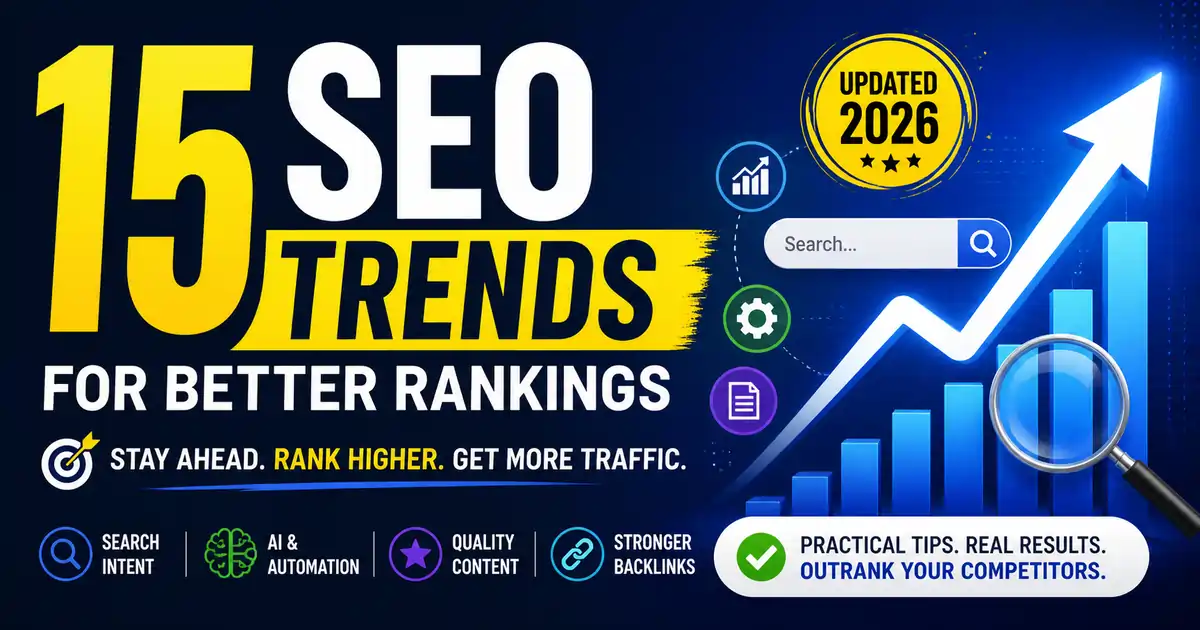
Must-Know SEO Trends for Better Rankings Key Takeaways
If you have been in the SEO space for any length of time, you know that tactics that worked three years ago can hurt you today.
Why Understanding Must-Know SEO Trends for Better Rankings Matters in 2026
If you have been in the SEO space for any length of time, you know that tactics that worked three years ago can hurt you today. I have seen clients lose traffic because they kept using outdated practices like excessive exact-match anchor text or shallow content designed only for bots.
The SEO trends for better rankings now center on serving real people first. Google’s algorithms, especially the AI-powered systems like RankBrain and the new Search Generative Experience (SGE), evaluate content based on relevance, authority, and usefulness. For beginners, this might sound overwhelming. But I promise, these trends are actually easier to follow once you understand the core principles. For a related guide, see 10 SEO Trends You Need to Know Right Now.
How to improve SEO rankings fast: The 15 Trends You Should Follow
I have broken down each trend with a clear explanation, real examples, and practical tips you can apply today. Whether you are a freelance writer, a small business owner, or an SEO specialist, these latest SEO tips 2026 will help you stay competitive.
1. Optimize for Google AI Search (SGE and Beyond)
Google’s AI-powered search experience summarizes answers directly in the search results. This means your content needs to be structured so that it can be easily extracted and summarized. Use clear headings, bullet points, and concise definitions. When I write for AI search, I aim for direct answers at the top of the article. For example, if you target “how to improve SEO rankings fast,” include a succinct answer in the first paragraph. This increases your chances of appearing in the AI snapshot. For a related guide, see AI Search Trends: How to Adapt Your SEO Strategy in 2026.
2. Prioritize EEAT (Experience, Expertise, Authoritativeness, Trustworthiness)
EEAT is not a direct ranking factor, but it influences how Google evaluates your content. I always include author bios with real credentials, cite reliable sources, and update older posts. If you are a blogger covering health, finance, or legal topics, you need demonstrated expertise. For affiliate marketers, this means sharing personal experiences and product testing results, not just listing features.
3. Focus on User Intent, Not Just Keywords
User intent is the “why” behind a search. Someone searching “best SEO practices today” wants a curated list, not a dictionary definition. I map every target keyword to an intent category: informational, navigational, commercial, or transactional. Then I shape the content format accordingly. This one shift improved my organic click-through rates by over 30% on some pages.
4. Build Topic Clusters Instead of Isolated Pages
Instead of writing one article about simple SEO techniques, create a pillar page that covers the entire topic and link out to detailed cluster posts. This structure signals topical authority to Google. I use this approach for my own site, and it consistently ranks pillar pages on page one for competitive terms. For small websites, this is one of the easiest easy SEO strategies that work.
5. Master Core Web Vitals and Technical SEO Basics
Page speed, interactivity, and visual stability are ranking signals. I run sites through Google’s PageSpeed Insights and fix issues like large images, render-blocking JavaScript, and slow server response times. Technical SEO basics like clean site structure, XML sitemaps, and proper canonical tags form the foundation for everything else. Without them, your great content may never get crawled properly.
6. Create High-Quality, Comprehensive Content
Thin content no longer works. Google favors in-depth articles that fully satisfy a search query. When I write a guide, I aim for at least 1,500 words, but I never add fluff just to hit a word count. Every paragraph should serve the reader. For example, in this article, I include specific examples and personal observations because that adds value. If you are looking for SEO content strategies, start by researching what your competitors cover, then go deeper.
7. Earn Quality Backlinks Through Relationships and Guest Posting
Backlinks remain a strong ranking signal, but the focus has shifted to relevance and trust. A single link from a respected industry blog is worth more than dozens from low-quality directories. I reach out to website owners in my niche with genuine value—unique data, original insights, or a helpful resource. This approach earns links naturally. If you are a beginner, start by commenting on relevant blogs and building relationships before asking for links.
8. Optimize for Voice Search and Conversational Queries
Voice search often uses longer, more natural phrases. For example, someone might type “best SEO practices today” but say “What are the best SEO practices right now?” I include FAQ sections and conversational sentences in my content to capture these queries. This also helps with featured snippets. SEO ranking tips for beginners often miss this nuance, but adding a simple FAQ block can give you extra visibility.
9. Use Structured Data to Stand Out in SERPs
Schema markup helps search engines understand your content. I add FAQ schema, HowTo schema, and Article schema to my posts. This can result in rich snippets that increase click-through rates. If you are not using structured data yet, start with a simple FAQ schema for your most popular articles. It is one of the easiest simple SEO techniques that delivers immediate visual benefits in search results.
10. Write for Humans, Then Optimize for Bots
I always write the first draft naturally, without worrying about keywords. Then I go back and include the focus keyword in the title, first paragraph, and a couple of H2s. This approach keeps the content engaging while still being SEO friendly. If you follow this, you will avoid the robotic tone that turns readers away. This is a core principle in my SEO optimization guide 2026.
11. Refresh and Update Old Content Regularly
Google prefers fresh content. I schedule quarterly reviews of my top-performing pages and update statistics, examples, and links. Sometimes a simple refresh can boost a page from page three to page one. This is a low-effort way to improve SEO rankings fast without creating something new from scratch.
12. Improve Click-Through Rate (CTR) with Compelling Titles and Meta Descriptions
Your title and meta description are the first things users see. I write titles that include numbers, power words, and a clear benefit. For meta descriptions, I keep them under 160 characters and include a call to action. Higher CTR signals to Google that your page is relevant, which can indirectly boost rankings. This is a key part of on page SEO tips that many people overlook.
13. Build a Strong Internal Linking Structure
Internal links help distribute page authority and guide users through your site. I always link from high-traffic pages to newer or less popular posts using relevant anchor text. This not only helps with rankings but also keeps readers on your site longer. For SEO for small websites, internal linking is a free and effective strategy.
14. Monitor SEO Metrics and Adapt Quickly
I use tools like Google Search Console and Ahrefs to track rankings, impressions, and click-through rates. If I notice a drop, I investigate immediately. Common issues include broken links, slow page speed, or content that has become outdated. By monitoring regularly, you can catch problems before they hurt your traffic. This is one of the most important SEO success strategies for any serious marketer.
15. Understand the Role of AI in Content Creation and Optimization
AI tools like ChatGPT can help with brainstorming, outlining, and even drafting. But I never publish AI-generated content without thorough editing and fact-checking. Google can detect low-quality AI content and may penalize it. The best approach is to use AI as a research assistant, then add your unique insights, personal examples, and expert opinions. This balances efficiency with quality, which is essential for maintaining SEO growth tips over the long term.
How SEO Trends Affect Search Rankings: Common Mistakes to Avoid
Even with the best intentions, it is easy to fall into traps that hurt your rankings. I have seen people over-optimize anchor text, ignore mobile usability, or create content that does not match search intent. One of the most common common SEO mistakes affecting rankings is keyword cannibalization—when multiple pages target the same keyword and compete against each other. To avoid this, keep a keyword map and ensure each page has a unique focus.
Another mistake is neglecting mobile optimization. Over 60% of searches now happen on mobile devices. If your site is not mobile-friendly, you will lose rankings and visitors. I test every site on a mobile device before launch. Following best SEO practices today means thinking mobile-first from the start.
Useful Resources
Here are two resources I regularly reference for staying current with SEO changes.
- Google SEO Starter Guide – Official guidance straight from Google on the fundamentals of search optimization.
- Ahrefs SEO Trends Report – Data-driven insights on current trends and algorithm shifts.
Frequently Asked Questions About Must-Know SEO Trends for Better Rankings
What are the most important SEO trends for better rankings ?
The most important trends include optimizing for Google AI search, prioritizing EEAT, focusing on user intent, building topic clusters, and improving Core Web Vitals.
What SEO trends should I follow to improve rankings?
You should follow trends like EEAT, user intent optimization, voice search readiness, structured data usage, and quality backlink building.
How do SEO trends affect search rankings?
SEO trends reflect changes in how Google evaluates content and user experience. Adapting to trends helps your site stay relevant and maintain or improve rankings.
What are the latest SEO strategies for ranking higher?
Latest strategies include creating EEAT-driven content, using AI tools responsibly, building topic clusters, and earning high-quality backlinks through genuine relationships.
How can I improve my SEO rankings in 2026?
Focus on user intent, update old content, optimize for mobile and Core Web Vitals, and build a strong internal linking structure. Consistency matters more than quick fixes.
Which SEO techniques work best today?
Techniques that work best are EEAT optimization, structured data, voice search optimization, content freshness, and quality backlinks. Avoid keyword stuffing and low-quality guest posts.
How does AI impact SEO rankings?
AI powers Google’s ranking algorithms and search experiences. Optimizing for AI means writing clear, structured content that answers questions directly.
What is the future of SEO rankings?
The future will focus even more on user experience, AI assistance, and demonstrated expertise. Traditional tactics like link quantity will diminish in importance.
How important is content for SEO rankings?
Content is the foundation of SEO. High-quality, comprehensive content that satisfies user intent is essential for ranking well. Without it, other efforts have little impact.
Do backlinks still help rankings?
Yes, but quality matters more than quantity. A few links from authoritative, relevant sites are far more valuable than many links from low-quality sources.
What role does user intent play in rankings?
User intent is crucial. Google aims to show results that match the searcher’s goal. Content that aligns with intent ranks higher and earns better engagement.
How do I optimize for Google AI search?
Use clear headings, bullet points, and direct answers at the top of your articles. Structure your content so that AI can easily summarize it for featured snippets.
What is EEAT in SEO rankings?
EEAT stands for Experience, Expertise, Authoritativeness, and Trustworthiness. It is a framework Google uses to assess content quality. Demonstrating EEAT helps improve rankings.
How does technical SEO improve rankings?
Technical SEO ensures your site can be crawled and indexed efficiently. It includes page speed, mobile optimization, site structure, and schema markup. Without it, content may not rank.
What are common SEO mistakes affecting rankings?
Common mistakes include keyword cannibalization, neglecting mobile optimization, using thin content, ignoring user intent, and over-optimizing anchor text.
How do I get started with easy SEO strategies that work ?
Start with a clean site structure, write content that answers real questions, use descriptive titles, and build a few quality backlinks. These basics will give you a strong foundation.
What are the best SEO practices today for small websites?
Focus on long-tail keywords, create in-depth content for your niche, optimize page speed, and use internal linking. Small sites can compete by being more specific and useful than larger competitors.
How often should I update my SEO content?
I recommend reviewing your top pages every 3-6 months. Update statistics, refresh examples, and ensure links still work. This keeps your content relevant and signals freshness to Google.
Can AI tools help me write SEO content?
Yes, AI tools can assist with research, outlines, and drafts. But you must edit thoroughly and add your own expertise. Publishing unedited AI content can lead to penalties.
What is the most important SEO success strategy for 2026?
The most important strategy is to put the user first. Create content that genuinely helps people, optimize for their experience, and demonstrate real expertise. Everything else follows from that.