
Competitor content gap analysis using AI helps Isulan businesses identify the exact keywords, topics, and pages that competitors rank for but they do not — revealing the highest-value content opportunities available in the Sultan Kudarat local search market. This guide explains how AI tools perform content gap analysis faster and more completely than manual methods, how to interpret and prioritize gap data for local business strategy, and how to turn identified gaps into optimized content that captures rankings and drives qualified traffic for Isulan businesses.
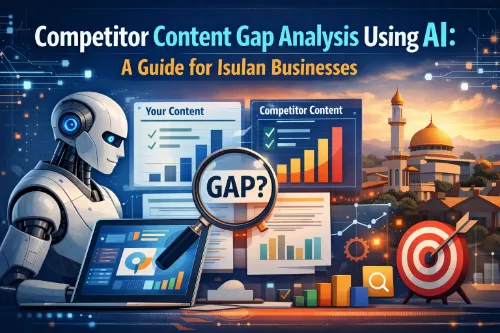
The Strategic Intelligence Most Isulan Businesses Never Use
Every business in Isulan competing for local search visibility is operating in the same competitive landscape. The same potential customers are searching the same keywords. The same Google results page determines who gets found and who stays invisible. And yet, most Isulan businesses approach SEO as if their competitors do not exist — building content strategies based entirely on their own assumptions about what customers search for, without ever examining what is already working for the businesses they compete with.
This is a strategic blind spot with an obvious and expensive consequence: businesses invest in content that targets the wrong keywords, ignores proven opportunities, and misses the specific gaps in the competitive landscape where new rankings can be captured quickly and with relatively modest content investment.
Competitor content gap analysis changes this entirely. Instead of building your SEO strategy in isolation, you start from a complete map of what your competitors are ranking for — and more specifically, what they are not ranking for — to identify the highest-value keyword opportunities available in the Isulan market right now. The gaps in your competitors’ content coverage are direct paths to rankings they have left undefended.
AI has transformed this process from a time-consuming manual exercise into a systematic, scalable intelligence operation that any Isulan business can execute with the right tools and approach. This guide walks through the complete process from competitor identification through gap analysis through content execution — giving Isulan businesses a practical roadmap for using competitive intelligence to drive real SEO results.
For context on how content gap analysis fits within a complete AI SEO strategy for Isulan, our guide to competitor content gap analysis provides the foundational framework alongside the broader picture of AI SEO services in Isulan.
What Content Gap Analysis Actually Reveals
Content gap analysis is often described simply as finding keywords your competitors rank for that you do not. That description is accurate but incomplete. A thorough AI-powered content gap analysis reveals multiple layers of competitive intelligence that together paint a complete picture of your SEO opportunity landscape:
Keyword gaps — the specific search terms your competitors rank for on page one of Google that your website does not rank for at all, or ranks for on page three or beyond. These represent the most direct opportunity: proven keywords with real search traffic where a competitive content investment could earn rankings you currently lack.
Topic gaps — entire subject areas that competitors cover comprehensively on their websites that you have not addressed at all. Topic gaps often represent strategic oversights that, when filled, can simultaneously capture multiple related keywords and build topical authority in areas your competitors have staked out.
Format gaps — content types that are ranking well for your target keywords that you have not produced. If a competitor’s FAQ page ranks for a cluster of informational keywords and you have no FAQ content, the format gap is as significant as the keyword gap.
Local intent gaps — keywords that include geographic qualifiers (Isulan, Sultan Kudarat, specific barangays, “near me”) where either no competitor has optimized content or where existing competitor content is thin and poorly optimized. These are the highest-priority opportunities for local Isulan businesses because they represent exactly the searches that local buyers make.
Freshness gaps — topics where competitors have older, outdated content that has retained rankings through historical authority but that a fresher, more comprehensive page could displace. AI content refresh and updating strategies can target these staleness gaps as direct ranking opportunities.
Search intent mapping overlaid on gap analysis data adds another critical dimension: not just where the gaps are, but what type of intent those gaps represent — helping Isulan businesses prioritize the gaps where buyer-intent keywords are being left uncaptured by the competition.
Identifying the Right Competitors for Gap Analysis in Isulan
The first decision in any content gap analysis is who to analyze. For Isulan businesses, this requires distinguishing between three types of competitors that require different analytical approaches:
Local Direct Competitors
These are businesses in Isulan and Sultan Kudarat that offer the same products or services to the same customer base. A dental clinic in Isulan competing with other dental clinics in the same city. A hardware store competing with other construction supply businesses in Sultan Kudarat. These competitors are your most important gap analysis targets because they are competing for the exact same local search traffic.
For local direct competitors, gap analysis reveals the specific keywords, service pages, and local content that are driving their traffic — and the specific gaps where they have left keyword real estate unclaimed that you can capture.
Regional and National Competitors Ranking in Local Results
These are businesses based outside Isulan that nonetheless rank in local search results for Isulan-relevant keywords — national chains, regional service providers, or larger companies with location pages targeting Sultan Kudarat. These competitors often have strong domain authority but weaker local content specificity, creating gap opportunities that a well-optimized local Isulan business can exploit through geographic content depth.
AI for local SEO analysis identifies precisely where national competitors have thin local content — the gaps where a locally-specific Isulan page can outrank a generic national competitor regardless of domain authority differences.
SEO Competitors — Sites Ranking for Your Keywords But Not Direct Business Competitors
Directories, review platforms, news sites, and industry blogs that rank for keywords relevant to your business represent a third competitor type. These sites do not compete for your customers directly, but they occupy search result positions that could otherwise be yours. Gap analysis against these sites reveals content formats and topic approaches that are earning rankings — which your business can adopt and improve upon.
AI-powered keyword research combined with competitor identification produces the complete competitive keyword landscape for any Isulan business — showing exactly who is ranking for what, and where the openings are.
The AI-Powered Content Gap Analysis Process: Step by Step
Step 1: Compile Your Competitor List and Baseline Your Own Rankings
Begin by listing five to ten competitors across all three categories described above. For direct local competitors, search your primary service keywords in Google from an Isulan location (or use a tool that simulates local search results) and identify the businesses that consistently appear in the top results. These are your primary gap analysis targets.
Simultaneously, export your own current keyword rankings from Google Search Console — your complete list of keywords where your website currently appears in search results, along with position data. This baseline is what you subtract from competitor keyword data to identify pure gaps (keywords they rank for that you do not appear for at all) versus weak position gaps (keywords where you rank on page two or three).
AI SEO audits establish this baseline comprehensively, including keywords you may not have been aware you were ranking for and technical issues that are limiting your current ranking performance.
Step 2: Extract Competitor Keyword Profiles Using AI Tools
Enter each competitor’s domain into Ahrefs Site Explorer, Semrush Organic Research, or Moz’s Link Explorer. Export their complete organic keyword ranking data — every keyword they appear for in Google search results, with position, estimated traffic, and keyword difficulty data.
Most of these tools now incorporate AI-powered gap analysis features that automatically compare your keyword profile against one or multiple competitor profiles simultaneously. Semrush’s Keyword Gap tool and Ahrefs’ Content Gap feature are specifically designed for this comparison — generating filtered lists of keywords that competitors rank for that you do not, sorted by traffic potential and competitive difficulty.
The AI analysis layer in these tools goes beyond simple keyword comparison: it clusters related gap keywords by topic and intent, identifies the specific pages on competitor sites that are earning rankings, and surfaces patterns in competitor content strategy that reveal where their topical coverage is strong versus where it is thin and vulnerable to displacement.
Step 3: Filter and Prioritize Gap Keywords by Local Relevance and Business Value
Raw gap keyword data from AI tools can include thousands of entries — far more than any Isulan business can realistically target with a focused content investment. The filtering and prioritization step is where gap data becomes an actionable strategy.
Apply these filters in sequence to identify your highest-priority gap targets:
Geographic filter first. Isolate all gap keywords that include Isulan, Sultan Kudarat, SOCCSKSARGEN, or “near me” modifiers. These local gap keywords represent the most directly relevant opportunities — searches that are specifically from your target customer base and that well-optimized local content can capture.
Intent filter second. Among the locally qualified gap keywords, identify those with transactional or commercial investigation intent — the buyer keywords and comparison keywords that drive leads and sales rather than just informational traffic. Search intent mapping applied to gap keyword data separates the high-converting opportunities from the traffic-only ones.
Difficulty filter third. Among the locally qualified, high-intent gap keywords, prioritize those with competition difficulty scores achievable for a local Isulan business. Keywords where the competing pages have thin content, weak local signals, or low domain authority are faster wins than keywords where established national competitors have deeply optimized, high-authority pages.
Business value filter fourth. Among the filtered candidates, rank by their direct connection to your highest-margin products or services. A gap keyword that drives inquiries for your most profitable service is worth more than one that drives equal traffic to a lower-margin offering.
AI content planning takes this prioritized gap keyword list and transforms it into a concrete content calendar — sequencing production to capture the highest-value gaps first while building toward comprehensive topical authority over time.
Step 4: Analyze the Content That Is Currently Ranking for Each Gap
For each priority gap keyword, examine the pages that are currently ranking in the top five results. This page-level analysis reveals what your content needs to do better than the current ranking pages to displace them:
Content depth. How comprehensive is the current ranking content? Does it answer the full scope of questions a buyer at this stage would have, or does it address only surface-level information? Depth gaps are among the easiest to exploit — create more thorough, complete content on the same topic and Google often rewards the more comprehensive resource.
Local specificity. Does the ranking content include genuine Isulan and Sultan Kudarat context — local business details, geographic references, locally relevant examples? Or is it generic content that ranks only because no locally specific content exists? Local specificity gaps are particularly valuable for Isulan businesses because you can naturally create the local context that outsiders cannot replicate authentically.
Content format. What format is the ranking content — a blog post, a service page, a comparison guide, a FAQ, a video transcript? Format gaps indicate that a different content type might outperform the current ranking format for that query’s intent. Topic cluster planning accounts for format diversity within topic clusters to address this dimension of competitive differentiation.
Freshness. When was the content last updated? Older content on rapidly evolving topics represents a freshness gap where newer, more current content has a structural advantage. AI SEO strategies that target freshness gaps systematically can earn rankings by simply being more current than existing competition.
Step 5: Build Your Gap-Filling Content Plan
With gap keywords prioritized and current ranking content analyzed, you have everything needed to build a content plan that closes your competitive gaps systematically. Structure this plan around three production tiers:
Immediate wins — the three to five gap keywords where the current ranking content is weakest and your competitive disadvantage is smallest. These should be your first content productions, targeting quick ranking gains that generate momentum and early results.
Strategic investments — the ten to twenty gap keywords that represent your most valuable long-term opportunities — high-intent, high-business-value keywords where earning rankings will significantly impact lead generation. These require more comprehensive content and may take three to six months to achieve strong rankings, but the payoff justifies the investment.
Topical completeness — the broader set of gap keywords needed to achieve comprehensive topical authority in your category. A topical map built around gap analysis data ensures your content strategy builds authority systematically rather than targeting isolated keywords without strategic coherence. Content strategy and topical authority planning integrates gap filling with long-term authority building.
Turning Gap Analysis Into Content That Outranks Competitors
Identifying gaps is intelligence work. Filling them is execution work. Here is how AI accelerates the content production required to capitalize on gap analysis findings for Isulan businesses:
AI-Assisted Content Creation at Scale
AI-assisted SEO article creation and AI SEO content writing compress the time between identifying a content gap and publishing optimized content that targets it — from weeks to days. For Isulan businesses with a significant number of priority gaps to fill, this speed advantage is decisive in competitive local markets where every week of delay allows competitors to potentially address their own gaps.
Local SEO content generation adds the geographic specificity that makes gap-filling content rank for Isulan searches specifically rather than competing at the national level where your competitive disadvantage is greatest. Hyperlocal SEO content strategies extend this local specificity to the barangay and sub-municipality level for the highest-value local keyword gaps.
Scaling content production using AI workflows makes comprehensive gap filling economically viable for small and medium businesses in Isulan that cannot afford large content production budgets but need to close multiple competitive gaps simultaneously to achieve meaningful search visibility improvement.
Service Page and Product Page Gap Filling
Many of the most valuable content gaps for local Isulan businesses are not in blog content — they are in service pages and product pages that competitors have and you do not, or that competitors have poorly optimized and you can do better.
Optimize service pages identified through gap analysis by ensuring they target the specific gap keywords that competitor service pages are currently ranking for, with deeper local context, stronger buyer intent alignment, and more complete information than the competing pages provide.
For e-commerce businesses, product page SEO optimization, category page SEO optimization, AI product descriptions, and e-commerce SEO content all apply gap analysis findings to fill the specific product and category keyword gaps that competitor e-commerce sites have claimed. AI SEO for local e-commerce integrates local gap signals throughout the product content strategy.
On-Page Optimization of Gap-Targeting Content
Content created to fill keyword gaps must be technically optimized to compete effectively. On-page SEO optimization ensures that gap-filling pages incorporate primary and secondary gap keywords in title tags, headings, meta descriptions, and body content with the correct density and placement to signal relevance without over-optimization.
AI SEO optimization compares each gap-filling page against the top-ranking competitor pages for the target keyword and provides specific recommendations for closing the relevance and quality gaps that remain after initial content production. Metadata and CTR optimization ensures the search listing for each gap-filling page earns clicks when it achieves rankings — completing the journey from gap identification to actual business traffic.
Landing page creation for high-value transactional gap keywords creates dedicated conversion pages that combine gap keyword targeting with conversion architecture optimized for the specific buyer intent of that search. SEO content that converts ensures that gap-filling content generates leads, not just rankings and traffic.
Structured Data and Schema as Competitive Gap Opportunities
One of the most consistently underexploited content gaps in the Isulan local search market is structured data. The majority of local businesses — including most well-established competitors — have not implemented schema markup on their websites. This creates a systematic gap opportunity: Isulan businesses that implement structured data SEO earn enhanced search listings that stand out visually from unstructured competitors.
AI schema markup implements the correct structured data for every page type — local business, service, product, FAQ, review — automatically and accurately. FAQ and schema content generation targets the People Also Ask opportunities that represent another consistent gap in competitor content coverage for Isulan businesses.
The payoff for filling structured data gaps is visible in search results: featured snippets in Google for informational queries, enhanced local business listings with star ratings and pricing for transactional searches, and a comprehensive rich results SEO strategy that maximizes the visual space and information density of your search listings compared to unstructured competitor listings.
CTR optimization strategies that leverage structured data enhancements compound the traffic benefit of ranking improvements — earning more clicks at any given ranking position than unstructured competitor listings earn at the same position.
Monitoring Gaps and Maintaining Competitive Intelligence Over Time
Competitor content gap analysis is not a one-time project — it is an ongoing intelligence practice. Competitors add new content, earn new rankings, and occasionally close gaps you identified as opportunities. Simultaneously, new gaps emerge as the competitive landscape evolves and as your own content fills existing gaps and reveals the next layer of opportunity.
AI SEO audits and reporting automate ongoing competitive gap monitoring, alerting Isulan businesses when significant changes occur in competitor keyword profiles and when new gap opportunities emerge. SEO performance tracking measures the ranking and traffic impact of gap-filling content investments, confirming which gaps have been successfully closed and which need additional content or optimization work.
SEO reporting translates gap closure progress into business metrics — traffic gained, rankings improved, leads generated — making the ROI of competitive content strategy visible and measurable for Isulan business owners. Local search visibility tracking specifically monitors how your local competitive position in Isulan and Sultan Kudarat search results evolves as gap-filling content accumulates authority.
Technical SEO improvements identified through AI SEO audits address the structural issues that can limit gap-filling page performance regardless of content quality — ensuring that the technical foundation supports the competitive content strategy built on gap analysis. AI SEO for conversion rate optimization ensures that traffic from closed keyword gaps converts into leads and sales at rates that make the investment worthwhile.
The relationship between international SEO and local SEO is relevant for Isulan businesses whose gap analysis reveals national and international competitors ranking for locally relevant keywords — a common scenario that requires a locally-specific content strategy rather than attempting to compete at the national level on domain authority alone.
Getting Started With Competitor Gap Analysis in Isulan
The starting point for every Isulan business is the same: identify your three most important local competitors and run a keyword gap analysis comparing their organic keyword profiles against your own. The first gap report you generate will almost always reveal immediately actionable opportunities — keywords with real local search volume and genuine buyer intent that competitors are capturing and you are not.
AI SEO for small business in Isulan makes competitor gap analysis accessible at every budget level — the tools exist, the process is learnable, and the competitive intelligence produced is as valuable for a small local business as it is for a larger organization. AI SEO services cost in Isulan reflects an investment that pays returns in rankings, traffic, and leads that compound as each closed gap builds authority for the next.
Working with an AI SEO agency in Isulan that combines AI analytical power with deep local market knowledge produces gap analysis that is both technically comprehensive and strategically relevant to the specific Isulan competitive landscape. AI SEO services built around competitive intelligence give Isulan businesses a systematic, evidence-based path to the search visibility their competitors have claimed — and beyond it, into the keyword territory that no one in the local market has yet captured.
AI SEO applied to competitive gap analysis is not about copying what competitors do. It is about identifying where they have left the door open — and walking through it before they realize it was unlocked.
FAQs
1. What is competitor content gap analysis?
It is the process of identifying keywords and topics competitors rank for that your website does not.
2. Why is content gap analysis important?
It reveals missed opportunities for rankings, traffic, and leads.
3. How does AI improve content gap analysis?
AI processes large datasets quickly and identifies gaps more accurately than manual methods.
4. What are keyword gaps?
Search terms competitors rank for that your site does not rank for.
5. What are topic gaps?
Entire subject areas your competitors cover but your website does not.
6. What are format gaps in SEO?
Content types (e.g., FAQs, blogs, service pages) competitors use that you have not created.
7. What are local intent gaps?
Location-based keywords where competitors have weak or no optimized content.
8. What are freshness gaps?
Outdated competitor content that can be replaced with newer, updated pages.
9. Who are direct competitors in SEO?
Local businesses offering the same services in Isulan or Sultan Kudarat.
10. What are indirect or SEO competitors?
Websites ranking for your keywords but not directly competing for customers.
11. How do you identify competitors for analysis?
By searching your main keywords and listing top-ranking websites.
12. What tools are used for gap analysis?
Platforms like Ahrefs, Semrush, and Moz with AI-powered comparison features.
13. How should gap keywords be prioritized?
By location relevance, search intent, competition level, and business value.
14. Why is local relevance important in gap analysis?
Because it targets actual customers within your service area.
15. What is intent filtering in gap analysis?
Focusing on transactional and commercial keywords that drive conversions.
16. How does SERP analysis support gap strategy?
It shows what type of content ranks and what improvements are needed.
17. How do you turn gaps into content?
By creating optimized pages targeting missing keywords and topics.
18. How does AI help in content creation?
It speeds up writing, optimization, and scaling of gap-filling content.
19. What is structured data as a gap opportunity?
Adding schema markup where competitors have not, improving visibility.
20. Is content gap analysis a one-time process?
No. It should be ongoing to adapt to changing competition and search trends.

