
If you’ve spent any time scrolling through Facebook or Instagram, you’ve already seen Meta advertising in action. Sponsored posts, story ads, reels with call-to-action buttons—they’re everywhere. Yet for many beginners, the same question keeps coming up: What are Meta ads and how do they actually work?
At the most basic level, What are Meta ads can be defined as paid advertisements created through Meta Ads Manager that appear across Facebook, Instagram, Messenger, and Meta’s partner apps and websites. They are not just “posts with money behind them.” They are sophisticated delivery vehicles designed to put the right offer in front of the right person at the exact moment they are most likely to take action.
As a seasoned specialist, I view these ads as a bridge. On one side, you have a brand with a solution; on the other, a user with a need (even if they don’t know it yet). Meta’s algorithm acts as the architect of that bridge.
The Meta Advertising Ecosystem Explained
Before diving deeper into What are Meta ads, it’s important to understand what “Meta” means in the context of advertising. When Mark Zuckerberg rebranded the company, it wasn’t just a name change; it was a signals integration. Meta is the parent company of:
- Facebook: The legacy giant, perfect for community building and long-form engagement.
- Instagram: The visual powerhouse where trends are born and aesthetics drive sales.
- Messenger: A direct-to-consumer channel for high-intent lead generation.
- Meta Audience Network: A collection of third-party mobile apps and sites where your ads can follow users outside of the social platforms.
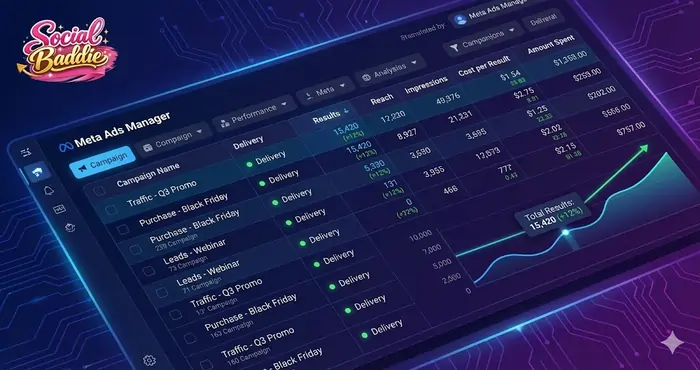
When you advertise through Meta, you’re not choosing just one platform. You’re accessing an interconnected advertising ecosystem that allows your ads to appear across multiple placements using one centralized system. All Meta advertising is managed through Meta Ads Manager, which is the “cockpit” where I spend 90% of my professional life.
Why Meta Ads Exist: The Business Case
Meta Ads exist to help businesses achieve specific outcomes, such as:
- Building brand awareness: Getting your name in front of people who haven’t heard of you.
- Driving traffic to a website: Pushing users to a specific landing page.
- Generating leads: Collecting emails or phone numbers directly within the app.
- Increasing online sales: Using the “Sales” objective to drive e-commerce conversions.
- Promoting apps or content: Encouraging downloads or video views.
Unlike traditional advertising, Meta Ads are performance-driven. Every campaign is tied to measurable data, allowing advertisers like myself to track results in real time. If an ad isn’t performing, we don’t wait for a monthly report; we pivot instantly.
How Meta Ads Differ from Traditional Advertising
To fully understand What are Meta ads, it helps to compare them to traditional advertising channels. Traditional ads (TV, radio, print) rely on “spray and pray.” You pay to reach large audiences, even if most of them aren’t interested. You’re paying for the possibility of a view.
Meta Ads, on the other hand, are built around:
- Audience Targeting: Reaching people based on what they like, where they live, and how they behave.
- Behavioral Data: Meta knows if you’re a “frequent shopper” or someone who just looks at photos of cats.
- Optimization Algorithms: The system learns who is clicking and shows the ad to similar people.
- Measurable Outcomes: You can see exactly how many dollars you spent to get one sale.
Jemmar’s Pro-Tip: In traditional media, the “Creative” is the king. In Meta ads, the “Data” is the king, but the “Creative” is the crown. You need both to rule the market.
How Meta Ads Work: The Three-Level Architecture
One reason people struggle to understand What are Meta ads is because they don’t know how campaigns are structured. It’s not just one big bucket of content. Meta Ads operate on a three-level system:
I. The Campaign Level
This is where you choose your objective. Your objective tells Meta what type of result you want most. If you choose “Traffic,” Meta looks for “clickers.” If you choose “Sales,” Meta looks for “buyers.”
II. The Ad Set Level
This is the “engine room.” Here, you define your target audience, placements (Facebook vs. Instagram), and your daily or lifetime budget. This is where I spend most of my time as a specialist, refining who gets to see the message.
III. The Ad Level
This is the creative part—the images, videos, and copy. When someone asks What are Meta ads, they usually think about the creative. In reality, success depends on how all three levels work together.
Comparing Facebook Ads vs. Instagram Ads
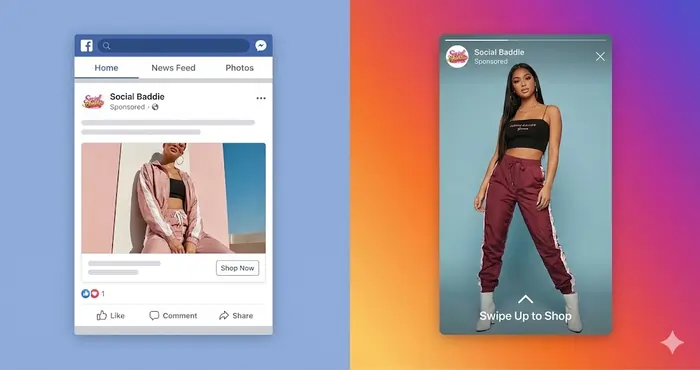
Another reason beginners ask What are Meta ads is because they’re unsure whether Facebook Ads and Instagram Ads are separate entities. Technically, they are formats within the same advertising system.
| Feature | Facebook Ads | Instagram Ads |
| Primary Demographic | 25-65+ (Broad) | 18-45 (Visual-focused) |
| Best Format | Long-form video, Single Image | Reels, Stories, Carousels |
| User Intent | Community, Information | Discovery, Inspiration |
| Success Metric | High CTR, Lead Quality | Engagement, Brand Lift |
Meta Ads Manager allows advertisers to run ads on both platforms simultaneously or test them independently using “Manual Placements.”
Types of Meta Ads: Choosing Your Weapon
Understanding What are Meta ads also means knowing the different ad formats available in your arsenal. After a decade of testing, I can tell you that the format often dictates the conversion rate.
- Image Ads: The classic. Best for simple messages and “stop the scroll” visuals.
- Video Ads: Essential for storytelling. If you aren’t using video in 2026, you’re leaving money on the table.
- Carousel Ads: Great for e-commerce. You can show up to 10 images or videos in a single ad, each with its own link.
- Collection Ads: A mobile-only “instant experience” that acts like a mini-landing page.
- Stories and Reels Ads: Vertical, immersive ads that take up the whole screen. These are currently the most cost-effective way to reach a younger audience.
Audience Targeting: The Real Power
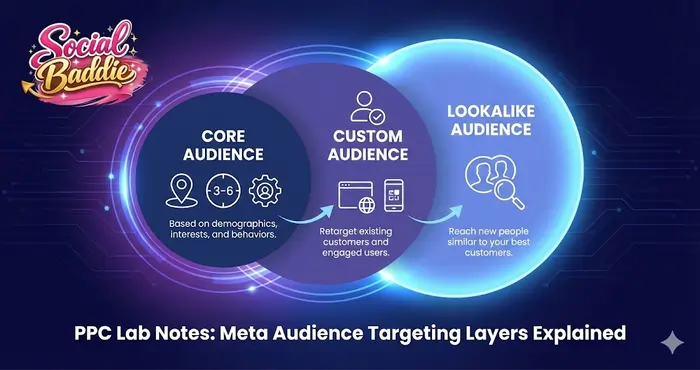
One of the most important parts of understanding What are Meta ads is learning how audience targeting works. In my years as a specialist, I’ve moved away from “broad” interest targeting toward more “intelligent” data-driven targeting.
Core Audiences
This is your “cold” audience. You target based on:
- Location: Down to a 1-mile radius.
- Demographics: Age, gender, education, job titles.
- Interests: What they follow, what they like.
Custom Audiences
These are the “warm” audiences. These are people who have already interacted with your brand. You can learn more about Meta’s audience tools to understand how to upload customer lists or track website visitors.
Lookalike Audiences (LAL)
This is Meta’s “secret sauce.” You give Meta a list of your 1,000 best customers, and the AI finds 2 million people who share their characteristics. It’s like cloning your best buyers.
The Math of Growth: How Much Do Meta Ads Cost?
Cost is one of the most common concerns when learning What are Meta ads. Meta Ads don’t have a fixed price; they operate on an auction system.
Think of it this way: thousands of brands are bidding for the same “eyeballs.” To win the auction without overpaying, your ad needs a high “Total Value.”
$$Total Value = (Advertiser Bid) \times (Estimated Action Rates) + (User Value)$$
If your ad is high quality and relevant to the user, Meta will actually charge you less to show it. Generally, you can start with as little as $5–$10 per day. As a specialist, I recommend starting with a “test budget” to gather data before scaling to the moon.
Key Metrics: Speaking the Language of Data
If you want Meta Ads to work, you must understand performance metrics. When people ask What are Meta ads, they often forget that data is the foundation of success.
As a data-driven specialist, these are the numbers I watch every morning:
- Impressions: How many times your ad was seen.
- Reach: The number of unique people who saw it.
- CTR (Click-Through Rate): The percentage of people who clicked. A 1% CTR is average; 2% or higher is great.
- CPC (Cost Per Click): How much you pay for each visitor.
- ROAS (Return on Ad Spend): The most important metric for e-commerce.$$ROAS = \frac{\text{Total Revenue from Ads}}{\text{Total Amount Spent on Ads}}$$
For deeper explanations of these metrics, Meta’s resource hub is an invaluable library for any serious marketer.
Common Mistakes Beginners Make (And How I Avoid Them)
Many beginners conclude Meta Ads “don’t work” because they make avoidable mistakes. Having managed campaigns for over a decade, I’ve seen it all. Understanding What are Meta ads helps prevent issues like:
- The “Boost Post” Trap: Boosting a post from your page doesn’t give you the targeting or optimization power of Ads Manager. It’s like buying a Ferrari and only driving it in first gear.
- Targeting Too Narrowly: If your audience is only 5,000 people, the algorithm doesn’t have enough “room” to learn.
- Ignoring the Creative: You can have the best targeting in the world, but if your ad looks like a 1990s flyer, no one will click.
- Touching the Ads Too Much: Every time you edit an ad, it goes back into the “Learning Phase.” Patience is a virtue in media buying.
Advanced Strategy: The Meta Pixel & Conversions API
To truly master What are Meta ads, you have to understand “Signals.” The Meta Pixel is a piece of code you put on your website. It tracks what people do after they click your ad.
However, with privacy changes (like iOS 14+), the Pixel isn’t enough. We now use the Conversions API (CAPI). This is a server-to-server connection that ensures your data is accurate even when browsers block cookies. As a specialist, I consider CAPI non-negotiable for any brand spending more than $1,000 a month.
Best Practices for 2026 and Beyond
Knowing What are Meta ads is only the first step. Execution matters more than theory. Here is my current playbook for success:
- Creative-First Approach: Stop trying to “hack” the audience. Let your video hook and your copy do the targeting for you.
- Advantage+ Everything: Meta’s AI is now better than most human media buyers at finding audiences. Use “Advantage+ Shopping Campaigns” to let the machine optimize your budget.
- The 3-Second Rule: You have exactly 3 seconds to catch a user’s attention in the feed. Use high-contrast visuals and “pattern interrupts.”
- Omnichannel Messaging: Don’t just sell. Use ads to tell a story, provide value, and build a relationship.
Are Meta Ads Still Worth It?
With increased competition and privacy changes, some people question whether Meta Ads are still effective. My answer? Absolutely. But the “barrier to entry” is higher.
Understanding What are Meta ads today means adapting to:
- Stronger creative requirements.
- Clearer, more authentic messaging.
- Smarter funnel design (moving people from awareness to purchase).
- Data-driven decisions based on long-term value, not just instant clicks.
When used correctly, Meta Ads remain one of the most scalable paid traffic sources available in the world. There is no other platform where you can reach 3 billion people with such surgical precision.
Final Thoughts
So, What are Meta ads really about?
They’re not about tricks, hacks, or “gaming” the algorithm. Meta Ads are about understanding people, delivering relevant messages, and using data to improve results over time. I’ve spent ten years perfecting this craft because I believe in the power of connecting the right product with the right person.
When approached strategically, Meta Ads become less intimidating and far more predictable. Whether you’re a beginner or planning to scale, mastering the fundamentals of Meta Ads is one of the smartest moves you can make in digital marketing.
If you are ready to stop guessing and start growing, the tools are right in front of you. It’s time to move past the question of What are Meta ads and start asking: “How can I make them work for my brand?”

