creator-led brand campaign ideas Key Takeaways
Creator-led campaigns now outperform traditional brand ads by up to 4x on social platforms, yet most brands still rely on polished agency content.
- creator-led brand campaign ideas rely on authentic storytelling, not scripted ads, to build trust with niche audiences.
- Platform-native content — short-form video, unprompted reviews, and behind-the-scenes clips — drives 3x higher click-through rates than polished brand assets.
- Measurable ROI improves when campaigns include clear CTAs, limited-time offers, and creator-specific discount codes.
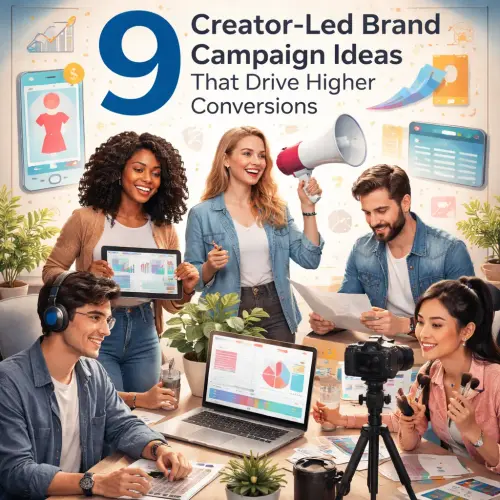
Why creator-led brand campaign ideas matter for conversions
Consumers today trust peer recommendations over brand messaging. According to a 2024 Nielsen study, 92% of shoppers trust influencer content over traditional ads. When a creator showcases your product in their natural environment — whether unboxing, reviewing, or using it in daily life — viewers perceive that endorsement as genuine. That perceived authenticity translates directly into higher conversion rates, often 3–5x higher than standard retargeting ads.
The psychology behind creator-led conversions
Creator content activates social proof. When followers see someone they admire using a product, they subconsciously think, “If they like it, I will too.” This shortcut bypasses skepticism and speeds up the decision-making process. As a result, brand campaign ideas for higher conversions must center on real people, not polished scripts.
9 proven creator-led brand campaign ideas to boost conversions
1. Unboxing and first-impression videos
Nothing builds anticipation like watching someone open your product for the first time. Creators film their genuine reactions, pointing out packaging quality, product feel, and initial thoughts. These videos thrive on TikTok, Instagram Reels, and YouTube Shorts.
Example: Glossier sends new launches to micro-creators who film raw unboxing reactions. Their video-based campaigns generate 40% higher add-to-cart rates than standard product pages.
Conversion tip: Add a time-limited discount code overlaid on the video. Prompt viewers with “Use code X for 15% off — expires in 48 hours.”
2. “Day in the life” product integration
Creators weave your product into their daily routine — morning skincare, work-from-home setup, fitness gear, or evening wind-down. The goal is to show the product solving a real problem without a hard sell.
Example: Athletic Greens partners with wellness creators to show their morning smoothie ritual featuring AG1. These posts see 25% higher swipe-up rates than static product shots.
Conversion tip: Ask creators to include a clear CTA like “Start your morning the same way — link in bio for a free starter pack.”
3. Before-and-after transformation content
Visual proof drives conversions. Creators demonstrate measurable change — clearer skin, better posture, more energy, tidier home — after using your product consistently. This works exceptionally well for beauty, fitness, cleaning, and supplement brands.
Example: The Ordinary sends sample-sized serums to micro-influencers who post 30-day transformation reels. Engagement rates exceed 8%, and direct product page visitors convert at 12%.
Conversion tip: Include a comparison slider or split-screen format. Add a “Shop the routine” link directly beneath the post.
4. Collaborative product launches
Co-create a limited-edition product with a creator — a custom flavor, color, scent, or accessory. The creator’s audience already trusts their taste, so launch-day conversions spike dramatically.
Example: ColourPop regularly collaborates with beauty creators on exclusive eyeshadow palettes. Pre-launch teasers from the creator generate 50,000+ waitlist signups in under 48 hours.
Conversion tip: Run a 72-hour pre-order window with a bonus item (e.g., free travel-size for first 1,000 orders). Use urgency copy: “Only 48 hours left!”
5. Creator-hosted live shopping events
Live streaming lets creators answer questions in real time, demo products interactively, and offer flash discounts. Platforms like TikTok Shop, Instagram Live Shopping, and Amazon Live make this easy.
Example: Rare Beauty’s founder Selena Gomez virtually joined micro-creators for live shade-matching sessions. Viewers purchased directly from the stream, achieving a 15% conversion rate — 3x the brand’s average.
Conversion tip: Offer a “shoutout” bonus — the first 50 who purchase get a personalized thank-you from the creator during the stream.
6. Honest review series with “con” segments
Paradoxically, highlighting a minor flaw increases trust. Creators who say “This works great for oily skin, but very dry skin might need extra moisturizer” feel more objective. Brands who allow this transparency earn higher credibility.
Example: Drunk Elephant encourages creators to mention both pros and cons. Their conversion rate from honest reviews is 18% higher than from scripted testimonials.
Conversion tip: Provide creators with a Q and A list of common concerns so they can address them head-on. Include a product “fix” suggestion (e.g., “if you’re sensitive, use this alternative”).
7. Creator-curated gift guides
Seasonal or occasion-specific gift roundups featuring your product alongside complementary items feel helpful, not salesy. Creators position your product as “the hero gift” within a thoughtful collection.
Example: Outdoor voices partnered with fitness creators for a “Holiday workout gift guide” on Instagram. Each creator’s post included a carousel of 5–7 items, with Outdoor Voices gear as the highlight. Click-through rates hit 6% — double the brand’s typical feed ads.
Conversion tip: Include a gift bundle link that auto-adds all recommended items to cart. Add a “Free shipping on orders over $75” note.
8. Creator takeover of brand social channels
Hand over your brand’s Instagram Stories, TikTok account, or YouTube channel to a creator for 24–48 hours. They bring their audience, their voice, and their energy — and you get fresh content that feels organically native.
Example: Away luggage lets travel creators take over their Instagram Stories during a trip. Real-time packing tips, airport hacks, and luggage demos lead to a 9% direct sales lift during each takeover.
Conversion tip: During the takeover, run an Instagram Stories poll: “Which color should I pack? DM me for a 10% off code.” Encourage instant action.
9. Community-generated content challenge
Launch a branded hashtag challenge where creators invite their followers to submit their own versions — unboxing, using, or styling your product. The best entries win prizes or get reposted. This creates a flywheel of organic content and social proof.
Example: Gymshark’s #Gymshark66 challenge encouraged creators to post 66-day fitness progress videos. The campaign generated over 1.5 million user submissions and a 34% increase in direct website traffic year-over-year.
Conversion tip: Offer a discount code to every participant (not just winners). Most participants will share the code with their followers, generating a new conversion channel.
How to measure conversion success for creator-led brand campaign ideas
Track these five metrics to know which campaigns are driving real revenue:
- Click-through rate (CTR) from creator content to your landing page — target over 3%.
- Average order value (AOV) from creator-driven traffic — compare to organic AOV.
- Return on ad spend (ROAS) when boosting creator content with paid promotion.
- Repeat purchase rate among customers acquired through creator links.
- Attribution window — many conversions happen days after the first touch, so use a 7- or 14-day click-through window.
Choosing the right creators for maximum conversion
Not all creators deliver the same results. Focus on engagement rate over follower count. Micro-creators (10k–100k followers) often convert better than mega-influencers because their audiences are tighter and more trusting. Also, look for creators who already mention your category organically in their content — it means their followers expect those recommendations.
Useful resources
Learn more about building effective creator partnerships and measuring ROI:
- Influencer Marketing Hub: Key Statistics and Trends
- WordStream: How to Calculate Influencer Marketing ROI
Launch your first creator-led brand campaign ideas today
The brands winning in 2025 understand that creator-led brand campaign ideas are not a trend — they are a fundamental shift in how people discover and decide to buy. Start small, test three ideas from this list, measure relentlessly, and then scale what works. Your conversion rates will thank you.
Frequently Asked Questions About creator-led brand campaign ideas
What are creator-led brand campaign ideas?
They are marketing strategies where independent content creators — not the brand itself — produce authentic content that promotes a product or service. The focus is on genuine storytelling rather than scripted advertising. For a related guide, see 8 Authentic Lo-Fi Content Strategies to Boost Social Media Engagement.
How do creator-led campaigns drive higher conversions?
They leverage social proof and trust. When a follower sees a creator they admire using a product, it reduces purchase hesitation. Studies show creator content converts 3–5x higher than traditional brand ads. For a related guide, see 10 Proven UGC Advertising Strategies Outperforming Traditional Ads.
What types of creators work best for conversions?
Micro-creators (10k–100k followers) with high engagement rates (over 5%) and a niche that aligns with your product. They have closer relationships with their audiences than mega-influencers.
Which social platforms are best for creator-led campaigns?
TikTok, Instagram (Reels and Stories), and YouTube Shorts are best for short-form video content. For longer-form trust-building, YouTube and TikTok’s longer video formats also work well.
How much should I pay creators for conversion-focused campaigns?
Rates vary widely. Micro-creators often accept free product + a flat fee of $200–$1,000 per post. Mid-tier creators (100k–500k) may charge $1,000–$5,000. Always negotiate a performance bonus for sales that exceed a set benchmark.
Should I give creators creative freedom or a script?
Give them a brief with key messaging points and a CTA, but let them use their own voice. Scripted content feels inauthentic and converts poorly. Trust the creator’s instincts on tone and format.
How do I track conversions from creator campaigns?
Use unique discount codes per creator, UTM parameters on links, and platform-specific tools like TikTok Shop or Instagram Shopping tags. Set up conversion tracking in Google Analytics and Facebook Pixel.
What is the average conversion rate for creator content?
It varies by vertical, but typical CTRs range from 2% to 7%. Direct purchase conversion rates (clicks to sales) average 5–12% for well-targeted creator campaigns.
How long should a creator-led campaign run?
For maximum impact, run a core campaign for 2–4 weeks. Then extend the best-performing content as boosted ads for another 4–8 weeks. Always A/B test different creator versions.
Can creator-led campaigns work for B2B brands?
Absolutely. B2B creator campaigns can feature industry experts, consultants, or LinkedIn thought leaders. They share case studies, “day in the life” at a trade show, or product walkthroughs.
Do I need to use affiliate links in creator partnerships?
Not always, but they can be effective. Affiliate links give creators a direct incentive (commission per sale) and provide clear attribution. However, for pure brand-building, a flat fee may be better to avoid over-commercialization.
How do I find the right creators for my niche?
Start by searching relevant hashtags on TikTok and Instagram, use tools like Upfluence or Aspire, or look at who your existing customers already follow. Check engagement rates and comment quality before reaching out.
What legal requirements apply to creator campaigns?
In the US, the FTC requires clear disclosure when a creator receives compensation — either mention “paid partnership” or “#ad.” In the EU, similar rules apply under GDPR and national advertising laws. Always include a contract with disclosure clauses.
Should I send products before creators agree to post?
Yes, but only after signing a brief agreement. Give creators enough time to genuinely test the product — typically 2–4 weeks. A rushed post feels forced and reduces conversion potential.
Can I repurpose creator content for paid ads?
Yes, with the creator’s written permission. In the contract, include a clause granting you usage rights for 6–12 months across ad platforms. Repurposing creator content as Facebook or TikTok ads often yields lower cost-per-click than studio-produced ads.
What’s the biggest mistake brands make with creator campaigns?
Micromanaging the content. If you over-edit or force scripted talking points, the content loses authenticity — and conversions drop. Let creators be themselves; that’s why their audience trusts them.
How do I scale a successful creator campaign?
Identify your top 5–10 performing creators and increase their compensation for repeat partnerships. Also, use their content as the basis for lookalike audiences in Meta Ads or TikTok ads. Ramp up spend on the best-performing pieces.
Should I focus on one platform or multiple?
Start with one platform where your target audience is most active — TikTok for Gen Z/millennials, Instagram for visual lifestyle, YouTube for in-depth reviews. Once you see a repeatable conversion model, expand to a second platform.
How long before Creator content starts converting?
Some creators generate sales within hours of posting (especially with flash discount codes). However, full attribution often takes 7–14 days as viewers may need multiple touchpoints. Be patient and track long-term metrics.
Can I run creator campaigns on a small budget?
Yes. Start with 3–5 micro-creators in exchange for free product plus a small fee. Track conversions carefully. If a creator delivers a good ROI, reinvest in their paid partnership. Many brands start with just $500–$1,000 total spend.