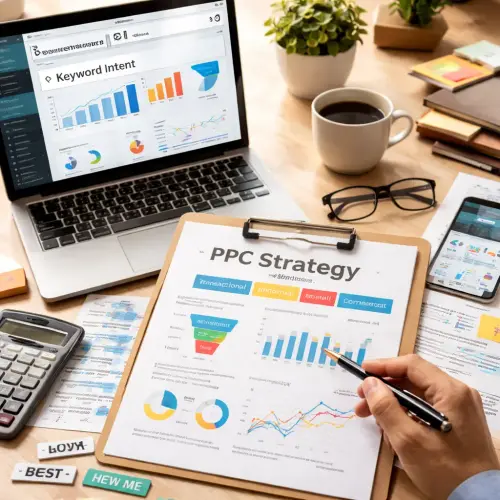
keyword intent strategies for PPC Key Takeaways
Imagine bidding on a keyword like "best running shoes" when a user actually wants to "buy running shoes size 10.
- keyword intent strategies for PPC enable you to categorize keywords into informational, navigational, commercial, and transactional buckets for precise targeting.
- Segmenting campaigns by intent type improves Quality Score, lowers CPA, and boosts return on ad spend.
- Actionable steps for each strategy include real-word examples for both B2B and B2C sectors.
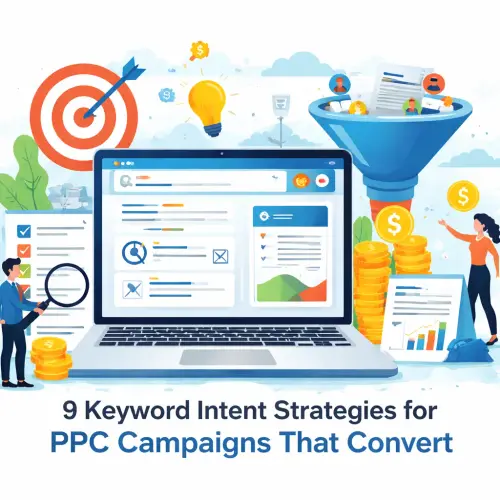
Why Understanding keyword intent strategies for PPC Matters
Imagine bidding on a keyword like “best running shoes” when a user actually wants to “buy running shoes size 10.” The first query indicates research (commercial intent), while the second signals purchase intent (transactional). Mixing them leads to irrelevant clicks and low conversion rates. For a related guide, see Search Intent Optimization for Rankings and Conversions.
By mastering keyword intent strategies for PPC, you can structure campaigns around user needs. This approach improves ad relevance, raises Quality Score, and ensures your budget is spent on clicks most likely to convert. In the following sections, we’ll explore nine actionable strategies that cover everything from keyword research to ad copy alignment.
Strategy 1: Map Keywords to the Four Intent Types
Start by grouping every keyword into one of four buckets: Informational, Navigational, Commercial, or Transactional. This foundational keyword intent strategy for PPC ensures each ad group targets a single intent stage.
How to Execute
- Informational: “how to tie a tie” → Use for top-of-funnel content.
- Navigational: “Nike official site” → Only bid if you own the brand.
- Commercial: “best CRM for startups” → Showcase comparisons and case studies.
- Transactional: “buy QuickBooks Pro 2024” → Send directly to the product page.
Strategy 2: Build Separate Ad Groups by Search Intent
Once your keywords are categorized, create distinct ad groups within each campaign. For instance, a campaign for “project management software” might have ad groups for “best tools” (commercial) and “free trial” (transactional).
Action Steps
- Create one ad group per intent category.
- Write ads that speak directly to that intent (e.g., “Compare Top Tools” vs. “Start Free Trial”).
- Use keyword intent strategies for PPC to set different bid adjustments for each group.
Strategy 3: Align Landing Pages with Keyword Intent
Your landing page must deliver what the keyword promises. A commercial keyword like “iPhone 15 vs Samsung Galaxy S24” should lead to a detailed comparison page, not a generic home page.
Implementation Tips
- Match landing page headlines to the search query.
- For informational keywords, use blog posts or guides.
- For transactional queries, use product pages with clear calls to action.
Strategy 4: Use Negative Keywords to Filter Irrelevant Intent
Negative keywords are critical for blocking unwanted intent. A user searching “cheap flights” likely won’t convert if you sell premium travel packages.
Common Negative Keyword Categories
- Words like “free,” “how to,” “job” for transactional campaigns.
- Competitor names if you aren’t targeting them directly.
- Modifiers that change intent (e.g., “used” vs. “new”).
Strategy 5: Segment Campaigns by Purchase Funnel Stage
Instead of mixing top-of-funnel and bottom-of-funnel keywords, create separate campaigns for each stage. This allows you to tailor budgets, bids, and messaging per funnel position.
Example Structure
- Awareness Campaign: Informational keywords, low bids, blog content.
- Evaluation Campaign: Commercial keywords, moderate bids, case studies.
- Conversion Campaign: Transactional keywords, high bids, product pages.
Strategy 6: Leverage Long-Tail Keywords for Clear Intent
Long-tail keywords often reveal explicit intent. “Buy organic dog food for puppies under $50” is unmistakably transactional, while “dog food reviews” is commercial.
Benefits
- Lower competition and cost-per-click.
- Higher conversion rates due to precise intent.
- Easier to create relevant ad copy and landing pages.
Strategy 7: Optimize Ad Copy with Intent-Focused Headlines
Your headline should immediately signal to the user that you understand their need. For example, for a commercial keyword, use “[Product] vs [Competitor]: Honest Review.”
Headline Templates by Intent
- Informational: “How to [Achieve Goal] in 5 Steps”
- Commercial: “Compare [Product] vs [Competitor]”
- Transactional: “Buy [Product] – Save 20% Today”
Strategy 8: Use Dynamic Keyword Insertion (DKI) with Caution
DKI can automatically insert the user’s query into your ad. But if the keyword intent doesn’t match your campaign, it can backfire. Use it only when you have tightly grouped intent-based keywords.
Best Practices
- Set a default fallback text that aligns with your intent.
- Test DKI on commercial and transactional ad groups first.
- Avoid using it for informational keywords where space is limited.
Strategy 9: Monitor Search Terms and Adjust Intent Segments
Regularly review your search terms report to find mismatches. If a search query like “how to paint a room” triggers your “buy paint” ad, add it as a negative keyword or create a separate informational ad group.
Ongoing Optimization
- Review search terms weekly for the first month, then monthly.
- Move high-performing long-tail keywords into their own ad groups.
- Document patterns in user intent to refine future keyword research.
Keyword Intent Categories Summary Table
| Intent Type | User Goal | Example Keywords | Best Ad Type |
|---|---|---|---|
| Informational | Learn or research | “how to train a puppy” | Blog post or guide |
| Navigational | Find a specific site | “Facebook login” | Brand campaign |
| Commercial | Compare options | “best vacuum for pet hair” | Comparison page |
| Transactional | Make a purchase | “buy Nike Air Zoom” | Product page |
How to Choose the Right keyword intent strategies for PPC for Your Business
Start by analyzing your existing campaign data. Look at which keywords have the highest conversion rates and match them to intent categories. If most conversions come from transactional queries, prioritize strategies 4, 5, and 6. For B2B companies with longer cycles, focus on strategies 1, 2, and 9 to nurture leads through the funnel.
Testing is critical. Run A/B tests with different ad copies and landing pages for each intent group. Monitor metrics like Quality Score, click-through rate, and cost per conversion. Over time, you’ll refine which keyword intent strategies for PPC yield the best ROI for your unique audience.
Useful Resources
For further reading on search intent and PPC optimization, check out these resources:
- Google Ads Help: About keyword match types – Official guide on how match types interact with query intent.
- Search Engine Land: The Complete Guide to Search Intent – In-depth overview of intent categories and their impact on search marketing.
Frequently Asked Questions About keyword intent strategies for PPC
What are keyword intent strategies for PPC?
These are methods for categorizing keywords by user goal (informational, navigational, commercial, transactional) and optimizing ad campaigns accordingly.
How do I determine keyword intent?
Look at modifiers like “buy,” “best,” “how to,” or “review.” Also consider the search context and whether the user needs information, a specific site, comparisons, or a purchase.
Why is keyword intent important for PPC?
It ensures your ads match what users actually want, improving Quality Score, lowering cost-per-click, and increasing conversion rates.
What is the difference between commercial and transactional intent?
Commercial intent indicates research and comparisons before a purchase, while transactional intent shows readiness to buy immediately.
Can I mix different intent types in one campaign?
It’s possible but not recommended. Mixed intent dilutes ad relevance and makes performance analysis harder. Separate campaigns or ad groups are better.
How many ad groups should I create per intent type?
At least one per intent category, but you can create multiple for different themes within the same intent (e.g., “best shoes” and “best bags”).
What tools help with keyword intent analysis?
Google Keyword Planner, Ahrefs, SEMrush, and SpyFu all provide search intent filters or modifiers to help categorize keywords.
How often should I update my intent segments?
Review monthly or after significant changes in search behavior. Seasonal trends and new product launches may shift intent patterns.
What is the best bid strategy for each intent type?
Transactional: Maximize Conversions. Commercial: Enhanced CPC. Informational: Maximize Clicks. Adjust based on campaign goals.
How do negative keywords help with intent?
They block searches that don’t match your target intent, preventing wasted spend on irrelevant queries.
Should I use phrase match for intent-based campaigns?
Yes, phrase match gives more control than broad match and is better for capturing specific intent modifiers.
What is a common mistake in keyword intent strategies ?
Using the same landing page for all intents. This reduces relevance and hurts Quality Score.
How does intent affect Quality Score?
When ad copy, landing page, and keywords all align with the same intent, Google rewards higher Quality Score, lowering your cost-per-click.
Can intent strategies work for local PPC campaigns?
Absolutely. For example, “plumber near me” has transactional intent, while “how to fix a leaky faucet” is informational. Segment accordingly.
What role does dynamic keyword insertion play?
DKI can auto-populate the query into your ad, but it works best when keywords are tightly grouped by intent to avoid mismatches.
How do I handle keywords with multiple intents?
If a keyword can fall into several intent categories, create separate ad groups for each likely intent and test performance.
What is the ROI improvement from using intent-based strategies?
Businesses often see 20-50% lower cost per lead and 30% higher conversion rates after implementing proper keyword intent segmentation.
Should I target informational keywords at all in PPC?
Yes, for brand awareness and top-of-funnel nurturing, but with lower bids and clear calls to action for the next step.
How do I scale intent-based campaigns?
Expand keyword lists using tools that mine related queries within each intent category, then create more granular ad groups. For a related guide, see Local Keyword Research Using AI Tools.
What are the best metrics to track for intent-based campaigns?
Focus on Quality Score, conversion rate, cost per conversion, and search impression share for each intent group.