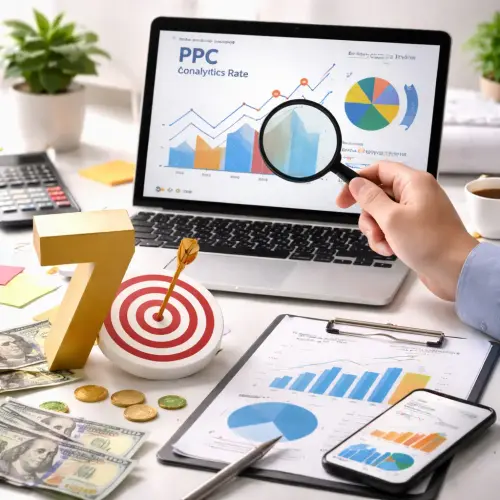
conversion rate tips Key Takeaways
Improving PPC conversion rates isn’t just about bids and keywords—it’s about aligning every click with a seamless, persuasive experience.
- Focus on landing page relevance first—every click deserves a page that matches the ad promise exactly.
- Leverage social proof and urgency wisely to nudge visitors without feeling pushy.
- Test relentlessly: small tweaks to headlines or CTAs can double your conversion rate over time.
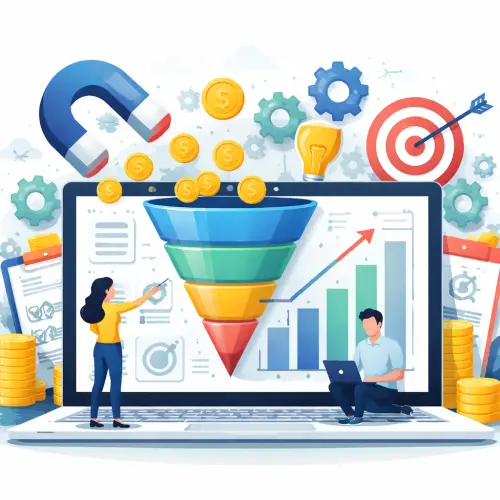
Why Most PPC Campaigns Fail Despite Good Traffic
Many advertisers pour budget into clicks but overlook what happens after the click. High traffic with low conversions usually signals a disconnect between the ad and the landing experience. These conversion rate tips target that gap directly. By fixing your post-click strategy, you get more value from every visitor and a healthier return on ad spend. For a related guide, see 8 Audience-First PPC Strategies That Convert Better.
Tip 1: Match Your Landing Page to Your Ad Copy Exactly
Conversion rate tips start with relevance. If your ad promises “24-hour shipping,” the landing page must show that offer front and center. When the message is consistent, visitors trust the experience and are more likely to convert. Mismatched copy feels bait-and-switch and kills credibility.
How to Align Headlines and Offers
Use the exact headline from your ad on the landing page. Repeat the key benefit or discount in the first paragraph. Keep visual cues (colors, logos, imagery) consistent between the ad and the page. This continuity reduces cognitive load and reinforces the decision to click.
Tools for Quick Relevance Checks
Google Ads’ Landing Page Experience score gives a starting point. Run your own audit by comparing ad text to page content for five random campaigns. Fix any mismatches before launching new traffic.
Tip 2: Speed Up Your Landing Page Load Time
Every second of delay costs conversions. A one-second delay can reduce conversions by 7% according to studies. For PPC traffic, where visitors arrive with intent, speed is non-negotiable. Use Google PageSpeed Insights or GTmetrix to identify bottlenecks. Compress images, enable browser caching, and reduce server response times. These technical fixes directly improve your conversion rate tips implementation.
Mobile Speed Is Critical
Over half of PPC clicks come from mobile devices. Test your landing pages on real devices, not just desktop simulators. Remove pop-ups that slow down mobile load. Simplify forms for thumb-friendly input. A fast, clean mobile experience keeps visitors from bouncing.
Tip 3: Use a Single Clear Call-to-Action Per Page
Too many choices paralyze visitors. A landing page with multiple CTAs (e.g., “Sign Up,” “Learn More,” “Download Now”) dilutes focus. Choose one primary action that matches the ad goal—whether it’s a purchase, a sign-up, or a demo request. Keep secondary links minimal. This is one of the simplest conversion rate tips that delivers fast wins.
Design Your CTA for Action
Use contrasting colors so the button stands out. Place it above the fold and repeat it once more near the bottom for scrollers. Write benefit-driven text: “Get My Discount” instead of “Submit.” Test button size and position with A/B tests to find the highest-converting version.
Tip 4: Add Social Proof Near Decision Points
Testimonials, reviews, trust badges, and case studies reduce perceived risk. Place them close to the CTA button or form. For B2B, include logos of known clients or industry awards. For ecommerce, show star ratings and recent purchase counts. Social proof works because it leverages others’ experiences to reassure new visitors—a subtle but powerful element in your conversion rate tips toolkit.
Types of Social Proof That Convert
- Customer testimonials with real names and photos (builds authenticity).
- Trust seals like Norton, McAfee, or BBB (reassures data safety).
- Real-time stats like “274 people bought this today” (creates urgency).
- Case study snippets with measurable results (ideal for B2B).
Tip 5: Build Urgency and Scarcity Without Manipulation
Urgency motivates action—but only when it feels genuine. Use countdown timers for limited-time discounts, low-stock alerts for products, or “limited availability” badges for services. Avoid fake deadlines that destroy trust. Honest urgency respects the visitor and still drives conversions. This is one of the more nuanced conversion rate tips because timing matters.
When to Use Urgency
| Scenario | Urgency Tactic | Example |
|---|---|---|
| Flash sale (24 hours) | Countdown timer above fold | “Ends in 3 hours” |
| Limited inventory | Low-stock alert near CTA | “Only 5 left in stock” |
| Limited seats | Seat availability indicator | “8 spots remaining” |
| Expiring coupon | Timer on checkout page | “Coupon expires in 20 minutes” |
Tip 6: Simplify Forms to the Bare Minimum
Every extra field reduces conversion rates. For lead generation, ask only for the information you absolutely need. Name and email often suffice for gated content. Remove optional fields. Use inline validation to show errors immediately. For checkout forms, enable auto-fill and offer guest checkout. Streamlining forms is a practical conversion rate tips approach that lowers friction.
Progressive Profiling as an Alternative
If you need more data over time, use progressive profiling: ask one or two new fields on each return visit. This respects the user and builds a richer profile without overwhelming them on the first interaction. It works especially well for B2B content offers where long-term nurturing is the goal.
Tip 7: Run Continuous A/B Tests on Key Elements
What works today might not work tomorrow. Audience preferences shift, competitors change offers, and ad platforms update algorithms. A/B test one element at a time—headline, CTA copy, image, form length, page layout. Use tools like Google Optimize or Optimizely. After a statistically significant sample, implement the winner and test again. This ongoing optimization is what separates average campaigns from top-performing ones when applying conversion rate tips systematically.
What to Test First
- Headline: Benefit versus question versus how-to.
- CTA button color and text.
- Image vs. video in hero section.
- Form length (3 fields vs. 5 fields).
- Social proof placement (top vs. near CTA).
Useful Resources
For deeper reading on landing page optimization, check out Unbounce’s landing page optimization guide for practical frameworks and examples. For conversion rate benchmarks and industry data, refer to WordStream’s conversion rate benchmarks by industry to see where your campaign stands.
Frequently Asked Questions About conversion rate tips
What are conversion rate tips for PPC?
Conversion rate tips for PPC are actionable strategies to increase the percentage of ad clicks that result in a desired action, such as a purchase, sign-up, or download. They focus on improving landing page relevance, speed, messaging, and user experience.
How do conversion rate tips improve PPC results?
By implementing these tips, you make your landing pages more persuasive and user-friendly, which reduces bounce rates and increases the likelihood that visitors complete your goal. This directly lowers your cost per acquisition and boosts return on ad spend.
What is the first conversion rate tip I should apply?
Start with aligning your landing page content to your ad copy. This immediate fix addresses the most common reason for low conversion rates: a mismatch between what the ad promises and what the page delivers.
How many landing page elements should I A/B test at once?
Test one element at a time to isolate its impact. Testing multiple changes simultaneously makes it impossible to know which change caused the result.
Why is landing page speed important for conversions?
Page speed directly affects user experience and trust. Slow loading frustrates visitors, increases bounce rate, and causes many users to leave before the page fully loads. Studies show even a one-second delay can drop conversions by 7%.
Can I use the same landing page for multiple PPC ads?
Yes, but only if all ads share the same core offer and message. If ads differ in headline, benefit, or audience, create dedicated landing pages to maintain relevance and avoid confusing visitors.
What counts as social proof on a landing page?
Social proof includes customer testimonials, reviews, trust badges, case studies, media logos, and real-time statistics like purchase counts. It builds credibility and reduces hesitation.
How do I add urgency without seeming dishonest?
Use legitimate limited-time offers, low-stock alerts, or genuine deadlines. Avoid fake countdowns or fabricated scarcity—visitors sense dishonesty and will lose trust in your brand.
What is the ideal length for a lead generation form?
Three to four fields is the sweet spot for most B2C offers. For B2B, you may need five to six fields if the offer is high-value, but always test shorter forms against longer ones.
How often should I run A/B tests on landing pages?
Ongoing testing is best. Run a test until you reach statistical significance (usually 1-2 weeks depending on traffic volume), then implement the winner and start a new test. Continuous optimization compounds over time.
What is a good conversion rate for PPC landing pages?
The average conversion rate varies by industry—typically 2% to 5% for ecommerce and 5% to 15% for lead generation. Your goal should be to beat your own baseline, not just hit an industry number.
Should I remove navigation from landing pages?
For dedicated PPC landing pages, yes. Removing main navigation and minimizing links keeps visitors focused on the single call to action. This can lift conversion rates by 15-30%.
How does mobile optimization affect conversion rates?
Mobile optimization is essential because most PPC traffic comes from mobile devices. If your landing page loads slowly, has small text, or uses complex forms on mobile, visitors will bounce. A smooth mobile experience directly lifts conversions.
What is the best CTA button color for conversions?
There is no universal best color—it depends on your page design and audience. High-contrast colors that stand out from the page background (like orange, green, or red) often perform well. Test two or three options to find your winner.
How do I know if my landing page is relevant enough?
Check that the headline, offer, and imagery match exactly what the ad promised. Use the Google Ads Landing Page Experience report as a baseline, then manually audit a sample of pages.
Can video on landing pages improve conversions?
Yes, especially for product demos, explainer videos, or testimonials. Video can boost engagement and trust, but keep it short (under two minutes) and ensure it doesn’t slow page load time.
What is progressive profiling?
Progressive profiling is a technique that asks for different information on each form submission from the same visitor. Over multiple visits, you gradually collect more data without overwhelming the user with many fields at once.
How does trust affect conversion rates?
Trust is a major conversion factor. Elements like security badges, money-back guarantees, transparent pricing, and privacy policies reduce hesitation and encourage visitors to take action.
What is the quickest conversion rate win for PPC?
Making your landing page headline exactly match your ad headline usually yields the fastest improvement. It immediately confirms to the visitor that they are in the right place.
How do conversion rate tips affect quality score?
Many of these tips, such as landing page relevance, speed, and clear CTAs, directly improve the Google Ads Landing Page Experience component of Quality Score. A better Quality Score can lower your cost per click and improve ad rank. For a related guide, see 10 Quality Score Tips to Cut PPC Costs.