
Search intent optimization is the strategic process of aligning content with user intent to improve search rankings, enhance engagement, and increase conversions. By integrating SEO, AEO (Answer Engine Optimization), GEO (Generative Engine Optimization), and NLP optimization, content becomes more relevant, discoverable, and actionable across modern search ecosystems.
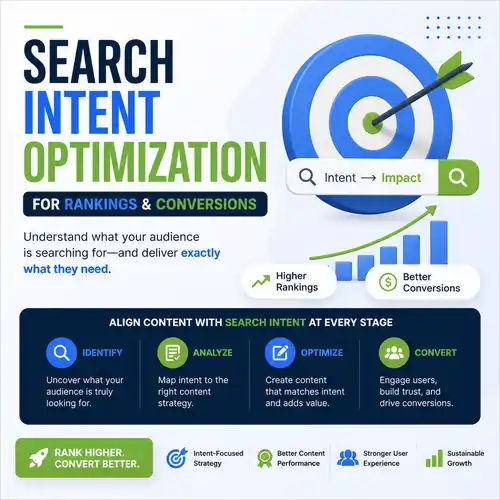
In the modern digital landscape, ranking on search engines is no longer just about inserting keywords into content. Search engines like Google now prioritize context, relevance, and most importantly, user intent. This shift has made search intent optimization one of the most critical components of a successful SEO content strategy.
Understanding and implementing search intent optimization allows content creators, SEO professionals, and businesses to create content that not only ranks but also converts. When your content aligns perfectly with what users are searching for, it naturally leads to better engagement, stronger trust, and higher conversions.
Understanding Search Intent in Depth
Search intent, also known as user intent, refers to the purpose behind a search query. Every time a user types something into a search engine, they have a specific goal in mind. Identifying that goal is the foundation of content relevance and semantic SEO.
The Four Core Types of Search Intent
1. Informational Intent
Users are seeking knowledge or answers. These queries often include words like:
- “how to”
- “what is”
- “guide”
- “tips”
Example: how to optimize content for search intent
2. Navigational Intent
Users want to find a specific website or brand.
Example: Facebook login or Ahrefs blog
3. Transactional Intent
Users are ready to take action, such as purchasing or signing up.
Example: buy SEO tools online
4. Commercial Investigation
Users are comparing products or services before making a decision.
Example: best SEO tools for beginners
Understanding these intent types ensures your content marketing strategy aligns with actual user needs.
Why Search Intent Optimization is Critical for SEO
Search engines are evolving rapidly. With updates like Google BERT, RankBrain, and the Helpful Content System, the focus is now on delivering results that truly satisfy users.
When you optimize for search intent, you benefit from:
- Improved organic traffic
- Higher click-through rates (CTR)
- Increased dwell time
- Reduced bounce rate
- Better conversion rate optimization (CRO)
Search engines interpret these signals as indicators of quality, boosting your rankings further.
Keyword Strategy for Search Intent Optimization
A strong keyword strategy goes beyond just identifying high-volume keywords. It involves understanding how different keyword types reflect different intents.
Types of Keywords to Use
- Primary keywords: search intent optimization, SEO strategy, content optimization
- LSI keywords: user behavior, search queries, semantic search, content relevance, topical authority
- Long-tail keywords: how to align content with user intent, optimize blog posts for conversions
- Transactional keywords: buy now, get started, sign up today
Using a mix of these ensures your content aligns with both search algorithms and human readers.
How to Analyze Search Intent Effectively
1. SERP Analysis
Study the top-ranking pages for your target keyword. Look at:
- Content format (listicles, guides, product pages)
- Title structures
- Featured snippets
This reveals what Google believes satisfies search intent.
2. Keyword Modifiers
Words like “best,” “review,” “cheap,” or “how to” provide clear intent signals.
3. Content Angle
Evaluate whether the content is educational, promotional, or comparative.
4. User Behavior Metrics
Use analytics tools to measure:
- Time on page
- Bounce rate
- Scroll depth
These metrics confirm whether your content matches user expectations.
Creating Content That Matches Search Intent
Structure Matters
A well-structured article improves both SEO performance and user experience.
- Use clear headings (H1, H2, H3)
- Break content into short paragraphs
- Include bullet points for readability
Content Format Alignment
- Informational → Blog posts, guides
- Transactional → Landing pages
- Commercial → Comparison articles
Answer Questions Clearly
For AEO, your content must provide direct, concise answers. This increases chances of appearing in:
- Featured snippets
- Voice search results
- AI-generated summaries
Integrating SEO, GEO, and AEO
SEO (Search Engine Optimization)
Focus on:
- on-page SEO
- technical SEO
- internal linking
- keyword placement
GEO (Generative Engine Optimization)
With AI-driven search engines, content must:
- Provide clear context
- Use structured data
- Maintain logical flow
AEO (Answer Engine Optimization)
To optimize for answer engines:
- Use question-based headings
- Provide concise answers
- Structure content for quick extraction
Advanced Content Optimization Techniques
Topic Clusters and Topical Authority
Creating topic clusters helps establish topical authority, which improves rankings across multiple related keywords.
Internal Linking Strategy
Internal links guide users and search engines, improving:
- Crawlability
- Session duration
- Content discoverability
Semantic SEO and NLP Optimization
Using natural language processing (NLP) techniques ensures your content aligns with how search engines interpret meaning.
This includes:
- Using synonyms and variations
- Writing naturally
- Avoiding keyword stuffing
User Experience and Search Intent
Even the most optimized content will fail if the user experience (UX) is poor.
Key UX factors include:
- Fast loading speed
- Mobile optimization
- Clear navigation
- Engaging layout
A positive user experience reinforces search intent satisfaction.
Conversion Optimization Through Search Intent
Aligning content with intent naturally leads to better conversions.
Examples:
- Informational → Offer lead magnets
- Commercial → Provide comparisons
- Transactional → Use strong CTAs
When users find exactly what they need, they are more likely to act.
Measuring Success in Search Intent Optimization
Track these metrics:
- Organic traffic growth
- Keyword rankings
- CTR (click-through rate)
- Bounce rate
- Conversion rate
Consistent monitoring ensures your strategy remains effective.
Common Mistakes in Search Intent Optimization
- Ignoring SERP analysis
- Targeting multiple intents on one page
- Overusing keywords unnaturally
- Neglecting user experience
- Failing to update content
Avoiding these mistakes improves long-term performance.
The Future of Search Intent Optimization
Search engines are becoming more intelligent, focusing on:
- AI-driven search results
- voice search optimization
- semantic understanding
- contextual relevance
This makes search intent optimization more important than ever.
Frequently Asked Questions
1. What is search intent optimization?
Search intent optimization ensures your content aligns with what users are actively searching for and expecting to find. It focuses on matching content format, depth, and purpose with user needs. This improves rankings, boosts engagement, and increases conversions.
2. Why is search intent important?
Search intent is important because it helps search engines determine whether your content is relevant to a query. When your content matches intent, it is more likely to rank higher in SERPs. It also improves user satisfaction and trust in your content.
3. What are the types of search intent?
There are four main types of search intent: informational, navigational, transactional, and commercial investigation. Each type represents a different stage in the user journey and decision-making process. Optimizing for these intents improves targeting accuracy and conversion potential.
4. How do I identify search intent?
You can identify search intent by analyzing SERPs, keyword modifiers, and the structure of top-ranking content. Observing whether results are guides, product pages, or comparisons reveals intent patterns. This helps you align your content with user expectations.
5. What is semantic SEO?
Semantic SEO focuses on the meaning and context behind search queries rather than exact keyword matches. It uses related terms, entities, and natural language to improve content relevance. This approach aligns with modern search algorithms like Google BERT.
6. What is AEO?
Answer Engine Optimization (AEO) focuses on providing clear, direct answers to user questions. It helps content appear in featured snippets, voice search results, and AI-generated responses. AEO improves visibility beyond traditional search rankings.
7. What is GEO?
Generative Engine Optimization (GEO) targets AI-powered search engines and generative platforms. It ensures content is structured, contextual, and easy for AI systems to interpret. This increases visibility in AI-driven search experiences.
8. Can I target multiple intents?
It is possible to target multiple intents, but it is generally not recommended for a single page. Mixing intents can confuse users and reduce content clarity. Focusing on one primary intent per page delivers better SEO results.
9. What tools help with intent analysis?
Tools like Ahrefs, SEMrush, and Google Search Console help analyze keywords and search behavior. They provide insights into SERP features and ranking patterns. These tools guide your content strategy based on real data.
10. How does user behavior affect SEO?
User behavior metrics such as bounce rate, dwell time, and click-through rate indicate content relevance. Positive engagement signals tell search engines your content satisfies intent. This can significantly improve rankings over time.
11. What are LSI keywords?
LSI keywords are semantically related terms that support your primary keyword. They help search engines understand the context and depth of your content. Using them naturally improves topical relevance and SEO performance.
12. How do I optimize for conversions?
To optimize for conversions, align your content with user intent and provide clear calls to action. Focus on delivering value, solving problems, and guiding users toward decisions. This improves both engagement and ROI.
13. What is topical authority?
Topical authority refers to your expertise and depth of coverage on a specific subject. It is built by creating comprehensive, interconnected content around a topic. This increases trust and improves overall search rankings.
14. How often should I update content?
Content should be updated regularly to maintain accuracy and relevance. Refreshing outdated information helps sustain rankings and user trust. Regular updates also signal freshness to search engines.
15. What is NLP in SEO?
Natural Language Processing (NLP) helps search engines understand human language and context. It analyzes sentence structure, intent, and meaning. Optimizing for NLP improves content clarity and ranking potential.
16. Does UX impact search intent?
Yes, user experience plays a major role in satisfying search intent. Poor UX can lead to high bounce rates and low engagement. A smooth, intuitive experience improves satisfaction and SEO performance.
17. What is conversion rate optimization?
Conversion Rate Optimization (CRO) focuses on increasing the percentage of users who take action. It involves improving content, design, and user flow. CRO works closely with search intent to drive meaningful results.
18. How do I improve CTR?
Improving CTR involves writing compelling titles and meta descriptions that match user intent. Use emotional triggers, clarity, and relevant keywords. This encourages users to click your content in search results.
19. What is voice search optimization?
Voice search optimization focuses on conversational and question-based queries. It aligns content with how people speak rather than type. This improves visibility in voice assistants and smart devices.
20. What is the future of SEO?
The future of SEO will focus heavily on intent, AI, and contextual understanding. Search engines will prioritize relevance and user satisfaction over simple keyword usage. High-quality, intent-driven content will dominate rankings.
Disclaimer
This article is for informational and educational purposes only and is based on current SEO, AEO, GEO, and digital marketing best practices. Search engine algorithms, ranking factors, and AI-driven systems continuously evolve, which means strategies that work today may change over time. While every effort has been made to ensure accuracy and relevance, results may vary depending on industry, competition, and implementation. Readers are encouraged to conduct their own research, testing, and analysis before applying any strategies discussed in this content.

