
Why I Write Content That Does More Than Fill a Page
Most websites already have content.
But not every website has content that actually works.
Some pages are written just to fill space. Some are built only around keywords. Some sound polished on the surface, yet fail to give readers a reason to keep reading. In a crowded digital space, that kind of content gets ignored fast. It does not hold attention, it does not build trust, and it does not help a brand stand out in a meaningful way.
That is where I believe I bring value.
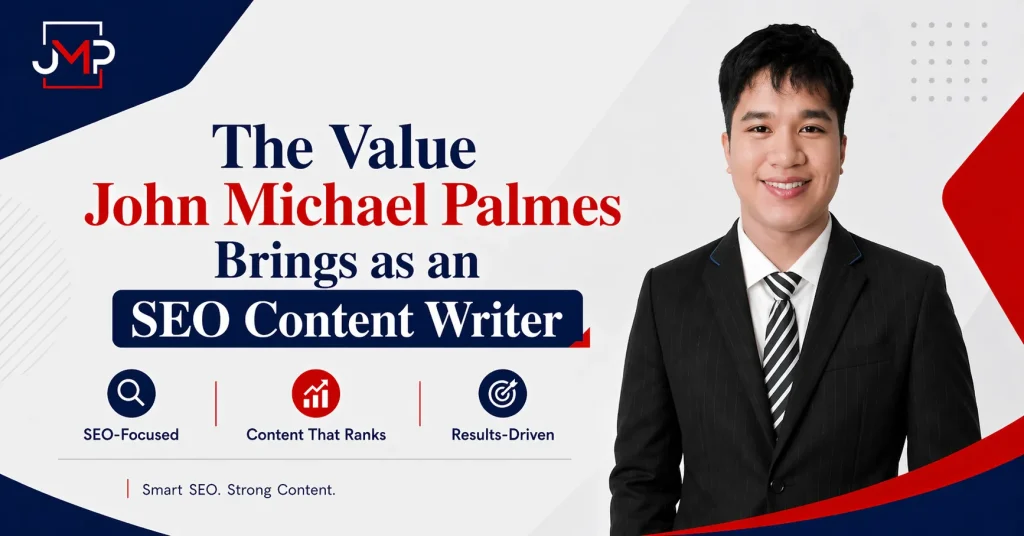
My name is John Michael Palmes, and I have spent more than three years working hands-on in SEO and digital marketing. Through that experience, I have learned that good content is not simply about writing words on a page. It is about understanding people, understanding search behavior, and understanding how a brand should present itself online.
As an SEO Content Writer, I do not see content as filler. I see it as one of the strongest tools a business can use to communicate clearly, attract the right audience, and build long-term visibility. When content is done well, it can help a brand get found on search engines, make a stronger first impression, answer real questions, and move readers closer to action.
That is how I approach my work.
I do not just want content to exist. I want it to do something useful. I want it to support visibility, reflect the brand well, and make the reader feel they landed on the right page.
In this article, I want to share the 10 ways I bring value as an SEO Content Writer and why that value matters for brands that want more than content that simply sits on a website.
Why SEO Content Writing Matters More Than Ever
SEO content writing is often misunderstood.
Some people think it starts and ends with keywords. Others think it is only about ranking on Google. While search visibility is important, strong SEO content goes much deeper than that.
Google’s own Search documentation emphasizes helpful, reliable, people-first content and explains SEO as helping search engines understand content while also helping users discover it.
Content is not just about traffic
Traffic matters, but traffic alone does not create value. A page can attract visitors and still fail if the content is weak, generic, confusing, or disconnected from what the reader needs. Getting the click is only one part of the job. The content also needs to hold attention, communicate well, and make the brand look credible.
Content should support both discoverability and trust
That is why I believe SEO content writing matters. It helps brands do two things at once. It helps search engines understand what the page is about, and it helps readers feel that the page is useful and worth their time. Google’s SEO Starter Guide frames SEO in that same two-sided way: helping search engines understand your content and helping users find your site through search.
The standard I aim for
When I write content, I want it to be:
Clear
Easy to read and easy to understand
Strategic
Built around a real purpose and not just a word count
Search-aware
Structured to support discoverability without sounding forced
Reader-focused
Written for real people, not just algorithms
That balance is a big part of the value I bring.

1. I Write With Search Intent in Mind
One of the first things I think about is search intent.
I do not begin with keywords alone. I begin with the reason behind the search. What is the user actually trying to find? Are they looking for a direct answer, a helpful guide, a comparison, or a service provider they can trust?
That question changes how content should be written.
A page can target the right keyword and still miss the mark if it does not match what the reader wants. That is why search intent matters so much. It shapes the direction of the page and affects how useful the content feels once someone lands on it.
How I apply search intent in my writing
I write around the reader’s actual goal, not just the phrase they typed into Google. That helps me create content that feels more relevant from the start and more aligned with how modern search works.
Why this matters to brands
When content matches intent, it has a better chance of connecting with the right audience. It feels more helpful, more natural, and more complete. That is the kind of content I aim to create.
Useful external link for this section
You can naturally link the phrase people-first content to Google’s guide on Creating Helpful, Reliable, People-First Content.
2. I Balance SEO Strategy With Human Writing
A lot of online content sounds like it was written only for a search engine.
It may be technically structured, but it feels cold and mechanical. That kind of writing usually fails to connect because readers can tell when the page was built only around ranking and not around actual communication.
I work hard to avoid that.
Human writing still matters
People do not connect with robotic phrasing. They respond to writing that sounds natural, thoughtful, and clear. That does not mean SEO should be ignored. It means SEO and human writing need to work together.
The balance I bring
I understand the role of headings, keyword placement, semantic relevance, internal structure, and content depth. At the same time, I want the content to flow well and feel like it was written by someone who understands both the topic and the audience.
Why that balance is valuable
Good visibility can bring readers to a page, but strong writing is what keeps them there. I want the content I create to support both.
Useful external link for this section
You can link SEO Starter Guide to Google’s official SEO Starter Guide.
3. I Focus on Clarity Over Filler
One of the strongest values I bring to my writing is clarity.
A lot of content tries too hard to sound impressive. The result is often vague, padded, and harder to follow than it should be. The writing may look polished, but it does not always communicate well.
I believe clear writing builds confidence.
Why clarity matters
Readers trust content more when it is easy to understand. Clear writing makes the brand sound more confident and more credible. It respects the reader’s time and makes the message stronger.
How I approach clarity
I try to keep every section purposeful. I do not want long paragraphs that say very little. I want the content to move naturally, explain things well, and make the core message easy to grasp.
Why this matters to businesses
When a brand communicates clearly, it leaves a stronger impression. Clear content helps people understand what the brand offers, what it stands for, and why it is worth paying attention to.
My content rule here
If a sentence sounds smart but does not add value, I cut it. I would rather sound clear than sound complicated.
4. I Write With a Clear Goal for Every Page
I do not treat every page the same.
A blog article has a different role from a service page. A landing page should not sound like a general article. A homepage section needs a different kind of clarity than an educational post.
Every page should have a job
Before I write, I ask what the page is supposed to do. Is it meant to attract organic traffic? Build trust? Answer a question? Support a service? Guide a reader toward action?
Why page purpose matters
When I understand the purpose of the page, I can shape the structure, tone, and depth more effectively. That makes the content feel more intentional and more aligned with the business goal behind it.
What brands gain from this
Instead of receiving content that simply fills space, brands get content built with direction. That direction helps the page perform its role more effectively.
A stronger way to think about content
For me, writing is not just about finishing a draft. It is about making sure the page can actually do the job it was created to do.
5. I Put the Reader First
I care about rankings, but I never forget that content is for people first.
That mindset affects everything I write.
Reader-first content feels more useful
When I work on a page, I think about what the reader may still be wondering. I think about what needs more explanation, where confusion may happen, and how the content can feel genuinely helpful instead of generic.
Why this improves performance too
When readers feel understood, they stay longer, engage more, and trust the message more easily. Reader-first writing creates a better experience, and that usually leads to stronger content overall.
The value I aim to create
I want the person reading the page to feel that the content gave them something useful. That feeling matters because it builds trust, and trust is one of the strongest things content can earn.
Useful external link for this section
You can link Google Search Essentials or people-first content to Google Search Essentials or the people-first guidance page. These official docs outline what Google expects from quality content and site practices.
6. I Help Brands Sound More Credible Online
Content shapes perception.
Before someone reaches out to a business, books a discovery call, or sends an inquiry, they often read the website first. They look at the service pages, skim the blog, and pay attention to how the brand presents itself.
First impressions are often made through content
If the content feels awkward, thin, or too generic, it can weaken trust quickly. Even a strong business can look less credible when the writing does not reflect quality.
How I think about brand credibility
I do not just think about what the page says. I also think about how it makes the business sound. Does the page feel clear? Does it sound thoughtful? Does it make the business appear capable and trustworthy?
Why that matters
Good content helps brands sound more prepared, more polished, and more serious about what they do. That is one of the strongest forms of value writing can offer.
My role as a writer
I am not just writing information. I am also helping shape how the brand is perceived.
7. I Treat Content as a Long-Term Asset
I do not believe content should be treated as something to publish and forget.
When content is done properly, it keeps working over time.
Strong content keeps bringing value
A well-written article can continue attracting traffic. A strong service page can keep supporting leads. A helpful guide can continue strengthening a brand’s authority in its niche.
My long-term mindset
I think about where the piece fits in the broader site. I think about how it supports nearby topics, how it reflects the brand, and how it may continue serving the business months after publication.
Why this matters
To me, content is not just output. It is part of the brand’s online foundation. That is why I treat it like an asset rather than a one-time task.
Useful external link for this section
You can link how Google Search works to Google’s official explanation of How Google Search Works. It explains crawling, indexing, and ranking at a high level.
8. I Support Business Growth Through Better Content
Content and growth are connected.
A strong article can attract new readers. A service page can help move a visitor closer to action. A clear brand piece can improve how people remember the business.
Content supports more than visibility
When content is written with purpose, it can support awareness, trust, and decision-making. It can help guide readers through different stages of the customer journey.
How I write with growth in mind
I think about the role the content plays in the bigger picture. Is it helping someone discover the brand? Is it building authority? Is it answering key questions before a conversion step?
The value of growth-focused content
When content is tied to a broader objective, it becomes more valuable to the business. That is one of the biggest reasons I take strategic writing seriously.
Useful external link for this section
If you want to mention measuring content performance, you can link Search Console Performance report to Google’s Performance report documentation, which explains how to track clicks, impressions, queries, and traffic trends.
9. I Keep Learning and Refining My Craft
SEO changes. Search behavior changes. Reader expectations change.
That is why I believe strong SEO writing requires continuous learning.
I do not work from autopilot
I do not see myself as someone who has already learned everything. I see myself as a practitioner who keeps refining, observing, and improving through actual work.
Why learning matters in SEO
A writer who stops learning often falls back on old habits. The content becomes predictable, outdated, or disconnected from what modern readers and search engines expect.
What this means in practice
I keep sharpening how I think, how I structure pages, and how I approach useful writing. That keeps my work grounded and helps me raise the quality of what I deliver.
Useful external link for this section
You can link Google Search Central Blog to the official Search Central Blog, where Google publishes updates and guidance for site owners. Google also has a guide on AI features and your website, which covers AI Overviews and AI Mode from a site owner’s perspective.
10. I Bring Practical Value, Not Empty Promises
There is a lot of noise in digital marketing.
Big claims are easy to make, but useful work is what really matters.
I prefer substance over hype
I do not want my writing to rely on buzzwords or vague promises. I want the value to be visible in the content itself. I want the work to feel purposeful, well-structured, and aligned with what the brand actually needs.
Why practical value matters
Most businesses are not looking for noise. They are looking for content that helps them present themselves better, support visibility, and build trust through clear communication.
The standard I bring
I focus on creating content backed by SEO understanding, reader awareness, and strong structure. That is the kind of value I want clients to feel when they work with me.
My promise
I would rather deliver content that works quietly and consistently than content that sounds loud but says very little.
What Brands Can Expect From Me
Clear Communication
I write to make the message easy to understand
I want the content to sound polished and professional without feeling heavy or difficult to follow.
Strategic Direction
I build content around a real purpose
I do not write only to fill a blog calendar or reach a word count.
Reader-Focused Writing
I think about the audience while shaping the page
I want the reader to feel that the content answers something meaningful.
Search-Aware Structure
I keep discoverability in mind
I write with SEO structure and visibility in view while keeping the content natural.
Brand-Aligned Messaging
I want the writing to reflect the quality of the business
The content should support credibility, not weaken it.
Final Thoughts
When I think about the value I bring as an SEO Content Writer, I do not reduce it to one skill.
It is not only about writing.
It is not only about SEO.
It is not only about rankings.
It is about how all of those things work together.
I bring an approach built on search intent, clarity, reader-first thinking, structure, and practical SEO understanding. I bring a writing style that values substance over filler and purpose over noise. Most of all, I bring intention.
I want every piece I write to do something useful.
I want it to help brands get found.
I want it to help readers feel understood.
I want it to reflect quality.
And I want it to support long-term growth in a way that feels honest and well-crafted.
That is the standard I hold myself to.
And that is the value I bring.
Let’s Work Together
If you are looking for an SEO Content Writer who can help your brand create content that is clear, strategic, and worth reading, I would love to work with you.
I Can Help With
Blog Articles
Website Content
SEO-Focused Service Pages
Brand Content That Sounds More Human and Credible
I am here to help build content that gives your brand a stronger voice online.
Let’s create content that does more than sit on a page. Let’s create content that earns attention and keeps it.
Frequently Asked Questions
1. How do you decide which topics to write about for a website?
I usually start by looking at the brand’s goals, target audience, and search opportunities. The best topics are the ones that match what possible customers are already searching for while also supporting the brand’s services or expertise.
2. Do you write content for beginners or more informed readers?
I can write for both. The tone, depth, and structure depend on who the content is for. What matters most is making sure the writing matches the audience’s level of understanding.
3. How do you make content feel less generic?
I avoid empty wording, recycled phrases, and vague explanations. I focus on clarity, relevance, and real usefulness so the content feels more intentional and more connected to the brand.
4. Can good content help lower bounce rates?
Yes, it can. When content is relevant, easy to read, and answers the reader’s question clearly, people are more likely to stay on the page longer and explore more of the site.
5. Do you follow a structure when writing articles?
Yes. I usually organize content with a strong introduction, clear headings, helpful subpoints, and a logical flow so readers can follow the message easily from start to finish.
6. Why is tone important in content writing?
Tone affects how a brand feels to the reader. A strong tone helps the content sound more consistent, more professional, and more aligned with the business’s identity.
7. How do you make website content easier to read?
I use short paragraphs, clear headings, natural flow, and direct wording. I also avoid making the writing feel too crowded or too technical unless the topic truly requires it.
8. Can content writing help build personal branding?
Yes. Strong content can help position a person as knowledgeable, credible, and worth paying attention to. It gives people a clearer sense of what that person does and what they stand for.
9. Do you think every brand needs a blog?
Not every brand needs one immediately, but many can benefit from it. A blog can help answer search questions, build topic relevance, and give the website more opportunities to attract organic traffic.
10. What makes content feel trustworthy to readers?
Content feels trustworthy when it is clear, specific, well-structured, and written with confidence. Readers are more likely to trust pages that sound thoughtful and genuinely useful.
11. How important are headlines in SEO content writing?
Headlines are very important because they shape the first impression of the page. A strong headline helps attract attention, set expectations, and make the topic clear right away.
12. Can content help a small business compete online?
Yes. Good content can help a small business become more visible, look more credible, and reach the right audience without relying only on paid ads.
13. How do you keep readers engaged throughout a long article?
I focus on flow, clarity, and structure. Breaking content into readable sections, using meaningful subheadings, and keeping the writing purposeful all help maintain interest.
14. Do you think long-form content is always better?
Not always. The ideal length depends on the topic, the search intent, and what the page needs to accomplish. A piece should be as long as necessary to be useful, but not longer than it needs to be.
15. Can strong content improve conversion potential?
Yes. While content alone does not guarantee conversions, it can build trust, answer concerns, and help readers feel more confident about taking the next step.
16. How do you approach writing for service-based businesses?
I focus on clarity, trust, and usefulness. Service-based content should explain the offer well, answer likely questions, and help the business sound professional and dependable.
17. Do you think content should always sound formal?
No. The tone should match the brand and audience. Some brands need a more polished tone, while others benefit from a more approachable and conversational voice.
18. Why is consistency important in content writing?
Consistency helps the brand feel more professional and easier to recognize. When the tone, quality, and structure stay strong across pages, the overall website feels more reliable.
19. Can one page of content really make a difference?
Yes. One strong page can improve visibility, answer an important question, support trust, and create a better impression of the brand. Small improvements in content can have meaningful impact over time.
20. What is your goal whenever you write content for a brand?
My goal is to create content that is useful, clear, search-aware, and aligned with the brand’s message. I want the page to do more than exist. I want it to help the brand communicate and grow.